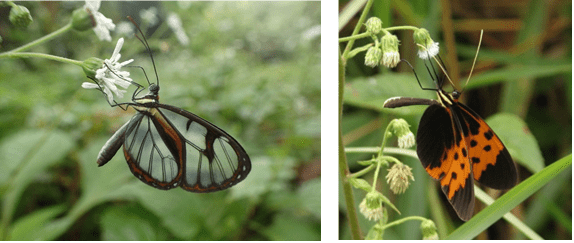
Violine Ossola: Clearwing butterflies are cool! Impact of wing transparency on heating capacities along altitudinal gradients in tropical butterflies 

In this week’s blog post we’re getting transparent about temperature regulatory processes in clear wing butterflies! Violine Ossola and team explore the sensitivities around thermal regulation in the neotropical tribe of butterflies known as Ithomiini. In their paper, “It’s cool to be clear:  transparency induces a thermal cost in clearwing butterflies”, they describe how clearwing and opaque butterflies tackle temperature gradients via different behavioural and … Continue reading Violine Ossola: Clearwing butterflies are cool! Impact of wing transparency on heating capacities along altitudinal gradients in tropical butterflies 

Samantha Bock: A long-standing evolutionary mystery: Why does temperature determine sex in long-lived reptiles?

In this blog post, Samantha Bock, a post-doctoral researcher, discusses her study “Differential early-life survival underlies the adaptive significance of temperature-dependent sex determination in a long-lived reptile“, which has been shortlisted for Functional Ecology’s 2023 Haldane Prize for Early Career Researchers. About the paper: The temperature an animal experiences during development can determine whether it becomes female or male in many reptiles and some fishes. … Continue reading Samantha Bock: A long-standing evolutionary mystery: Why does temperature determine sex in long-lived reptiles?

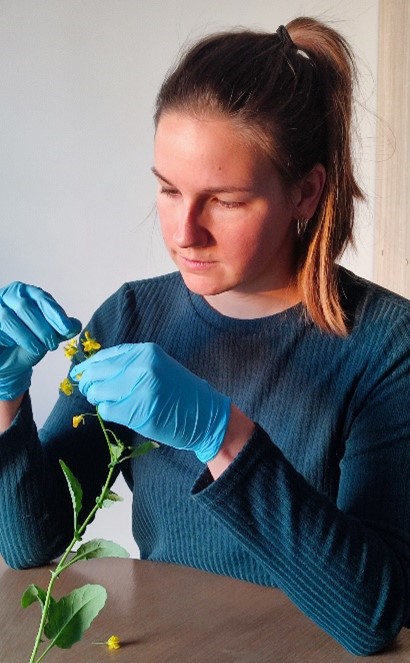
Laura Bellec: Inside the feeding behavior of a pollinivore

In this new post, Laura Bellec—a new ecological researcher working at the Univ Rennes 1, Rennes, France—discusses her paper: Factors driving the within-plant patterns of resource exploitation in a herbivore—recently shortlisted for the 2022 Haldane Prize for Early Career Researchers. About the paper Animals need to find food to survive and grow; however, searching for food is energetically expensive. Thus, animals have evolved strategies that … Continue reading Laura Bellec: Inside the feeding behavior of a pollinivore

David Villalobos Chaves: Foraging for efficiency—morphological traits provide support for variations in performance of the feeding apparatus in coexisting Neotropical bats

In this new post, David Villalobos Chaves, a PhD student at Department of Biology and Burke Museum of Natural History and Culture, University of Washington, Seattle, WA, USA, discusses his paper: Craniodental traits predict feeding performance and dietary hardness in a community of Neotropical free-tailed bats (Chiroptera: Molossidae)—recently shortlisted for the 2022 Haldane Prize for Early Career Researchers. About the paper Our research adds support … Continue reading David Villalobos Chaves: Foraging for efficiency—morphological traits provide support for variations in performance of the feeding apparatus in coexisting Neotropical bats

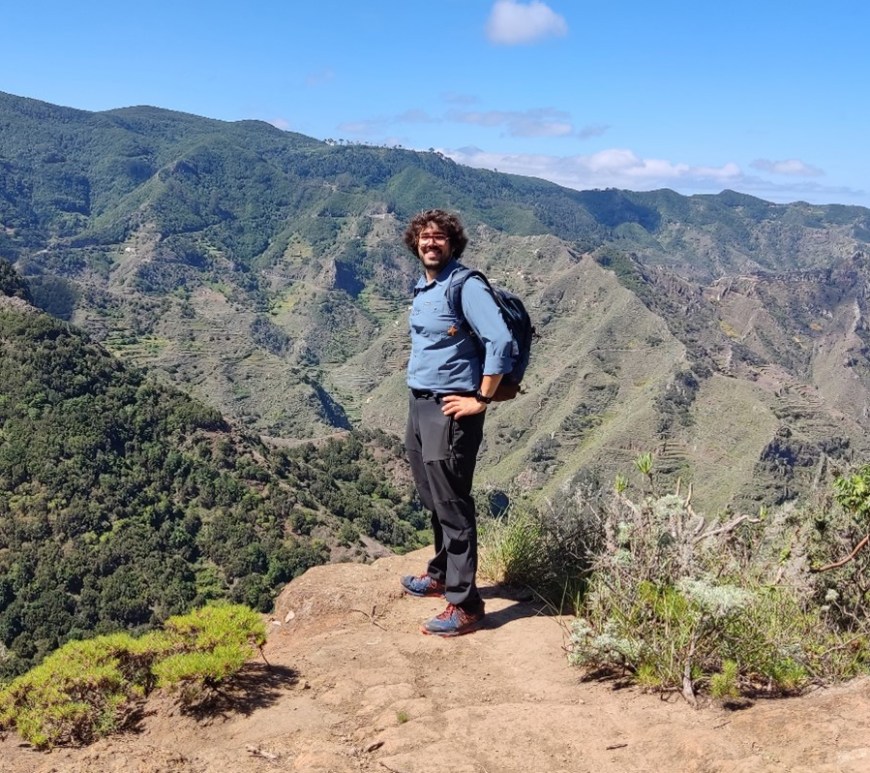
Mario Blanco-Sánchez: La selección natural favorece de manera consistente a las plantas con una estrategia adquisitiva de recursos en el semiárido mediterráneo

En esta nueva publicación, Mario Blanco-Sánchez, estudiante de doctorado en la Universidad Rey Juan Carlos, España, presenta su última publicación ‘La selección natural favorece el escape de la sequía y una estrategia adquisitiva de uso de recursos en arbustos mediterráneos semiáridos‘. Habla de cómo lidió con un resultado sorprendente y alienta a los jóvenes ecologistas a perseguir sus propios intereses en el campo. Una traducción … Continue reading Mario Blanco-Sánchez: La selección natural favorece de manera consistente a las plantas con una estrategia adquisitiva de recursos en el semiárido mediterráneo

Mario Blanco-Sánchez: Natural selection consistently favours an acquisitive resource-use strategy in Mediterranean semiarid plants

In this new post, Mario Blanco-Sánchez, Ph.D student at University Rey Juan Carlos, Spain, presents his latest publication ‘Natural selection favours drought escape and an acquisitive resource-use strategy in semiarid Mediterranean shrubs’. He discusses how he dealt with a striking result and encourages young ecologists to pursue their own interests in the field! A Spanish translation of this blogpost is available to read here! About … Continue reading Mario Blanco-Sánchez: Natural selection consistently favours an acquisitive resource-use strategy in Mediterranean semiarid plants

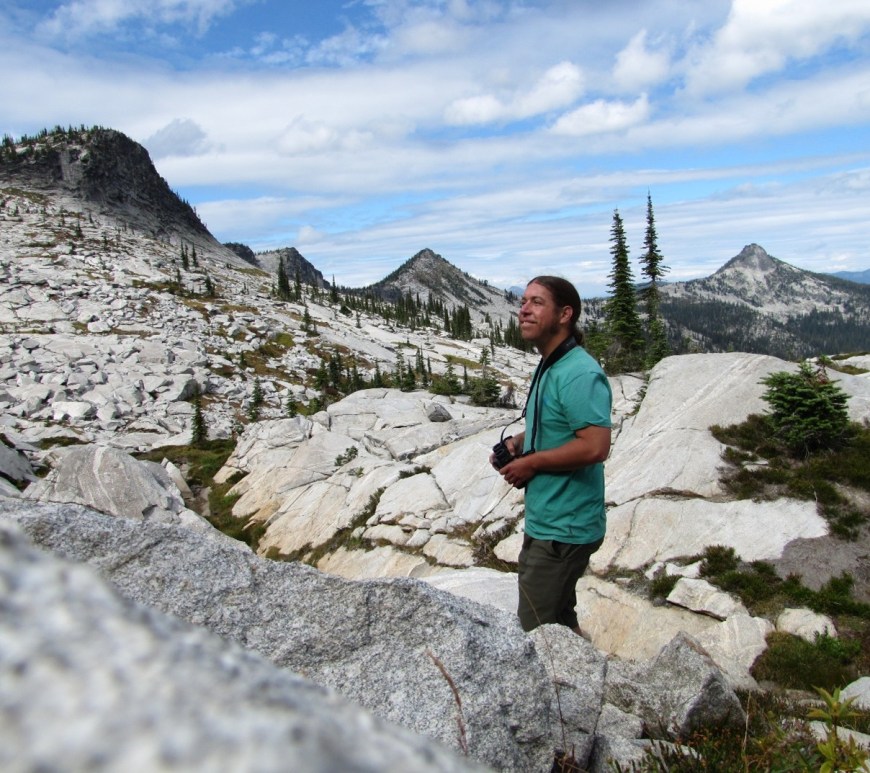
Carl G. Lundblad: Understanding the evolutionary causes of variation in an overlooked life-history trait, incubation period.

In this new post, Carl G. Lundblad, a new ecological researcher working at Oregon State University, ORE, USA, shares his paper: Intraspecific variation in incubation behaviours along a latitudinal gradient is driven by nest microclimate and selection on neonate quality—recently shortlisted for the Haldane Prize for Early Career Researchers. Like many wildlife ecologists, I was drawn to the field through a lifelong fascination with the … Continue reading Carl G. Lundblad: Understanding the evolutionary causes of variation in an overlooked life-history trait, incubation period.

Javiera Benavente: Scaling of metabolism and excretion along a temperature gradient

In this blog post, Dr. Javiera Benavente, who recently graduated with their PhD from the University of Auckland, discusses with their recently accepted paper, “Plasticity and evolution shape the scaling of metabolism and excretion along a geothermal temperature gradient.” About the paper In this paper, we investigated how phenotypic plasticity and contemporary evolutionary adaptation can shape how the size- and temperature-dependence of metabolic and excretion … Continue reading Javiera Benavente: Scaling of metabolism and excretion along a temperature gradient

Sam van Wassenbergh at the computer at University of Antwerp, Department of Biology.

Sam van Wassenbergh: aerodynamics behind lizards resistance to hurricanes

In our latest post, Sam van Wassenbergh from the University of Antwerp discusses his latest work ‘An aerodynamic perspective on hurricane-induced selection on Anolis lizards’. He presents the importance of functional traits trade-offs in species adaptations, highlights the need to use multidisciplinary approaches in science and shares his pride on working with his student. About the paper In our paper, we wanted to understand why … Continue reading Sam van Wassenbergh: aerodynamics behind lizards resistance to hurricanes