Indra Boving: Plants and flammability—Deep inside the mechanisms of wild fires

In this revisited blog post, Indra Boving, a PhD candidate at University of California-Santa Barbara, USA, shares her work ‘Live fuel moisture and water potential exhibit differing relationships with leaf-level flammability thresholds’, which has been shortlisted for Functional Ecology’s 2023 Haldane Prize for early career researchers. About the paper Our paper was inspired by patterns observed across the landscape in Southern California chapparal: wildfires typically … Continue reading Indra Boving: Plants and flammability—Deep inside the mechanisms of wild fires

Samantha Bock: A long-standing evolutionary mystery: Why does temperature determine sex in long-lived reptiles?

In this blog post, Samantha Bock, a post-doctoral researcher, discusses her study “Differential early-life survival underlies the adaptive significance of temperature-dependent sex determination in a long-lived reptile“, which has been shortlisted for Functional Ecology’s 2023 Haldane Prize for Early Career Researchers. About the paper: The temperature an animal experiences during development can determine whether it becomes female or male in many reptiles and some fishes. … Continue reading Samantha Bock: A long-standing evolutionary mystery: Why does temperature determine sex in long-lived reptiles?

Lina Aoyama: Root diversity in grasslands buffers biomass production under drought

In this post, Lina Aoyama, a PhD student at the University of Oregon, discusses their research “Functional diversity buffers biomass production across variable rainfall conditions through different processes above- versus below-ground“, which has been shortlisted for Functional Ecology’s 2023 Haldane Prize for Early Career Researchers. About the paper Water is a strong driver of plant productivity, and which plant species are there and how many … Continue reading Lina Aoyama: Root diversity in grasslands buffers biomass production under drought

2023 Haldane Prize Shortlist: Functional Ecology’s Award for Early Career Researchers

The Haldane Prize is awarded by the British Ecological Society each year for the best paper in Functional Ecology written by an early career author. With entries spanning the 37th volume of the journal, our Senior Editors carefully shortlisted the following 12 papers: Lina Aoyama Functional diversity buffers biomass production across variable rainfall conditions through different processes above- versus below-ground Lina found that although biomass was largely … Continue reading 2023 Haldane Prize Shortlist: Functional Ecology’s Award for Early Career Researchers

Yingying Wang

Moving Ecology: Yingying Wang

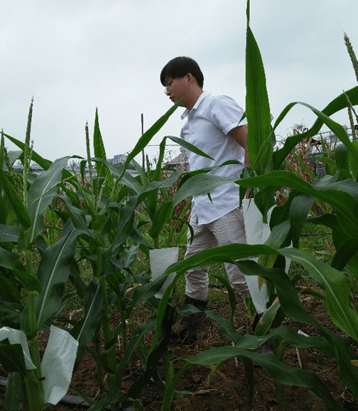
In this series we share the experiences of ‘globetrotters’ in ecological sciences, who have traveled all over the world during their research career. Dr. Yingying Wang, the current Haldane prize winner, writes about her academic journey from China for her M.S., to the Netherlands for her Ph.D., and finally to Finland for her postdoctoral research.

Continue reading “Moving Ecology: Yingying Wang”

“Both groups are picking the flowers when they’re feeding – they’re walking about and you can see them pick flower after flower after flower after flower.” Jurene Kemp talks to Ken Thompson in our new podcast!

Find our podcasts on apple, spotify and stitcher, or your favourite podcast app. “It seems that both groups are picking the flowers when they’re feeding – they’re walking about and you can see them pick flower after flower after flower after flower.” In this podcast, Jurene Kemp talks about her paper, Cryptic petal coloration decreases floral apparency and herbivory in nocturnally closing daisies – recently … Continue reading “Both groups are picking the flowers when they’re feeding – they’re walking about and you can see them pick flower after flower after flower after flower.” Jurene Kemp talks to Ken Thompson in our new podcast!

Abby Kimmitt hold a female resident junco at her field site near University of Virginia’s Mountain Lake Biological Station in Pembroke, VA. Photo Credit: Kaitlin Alford.

Abigail Kimmitt – Seasonal sympatry and timing of reproduction in dark-eyed juncos.

Abby Kimmitt hold a female resident junco at her field site near University of Virginia’s Mountain Lake Biological Station in Pembroke, VA. Photo Credit: Kaitlin Alford.

Dr. Abigail Kimmitt, a postdoctoral researcher at Texas A&M University, tells us about her paper “Migratory strategy explains differences in timing of female reproductive development in seasonally sympatric songbirds”, as well as her current projects and her journey in becoming an ecologist.

Continue reading “Abigail Kimmitt – Seasonal sympatry and timing of reproduction in dark-eyed juncos.”

Erin Sauer: toads, fevers and finding ecology

Dr Erin Sauer in Iceland (with puffin.)

Dr. Erin L. Sauer is a postdoctoral researcher at the University of Wisconsin – Madison in the Forest and Wildlife Ecology Department. Her research focuses on understanding how environmental pressures and animal behaviour shape host-parasite interactions, and she recently published a paper showing that behavioural fever reduces ranaviral infection in toads

Continue reading “Erin Sauer: toads, fevers and finding ecology”