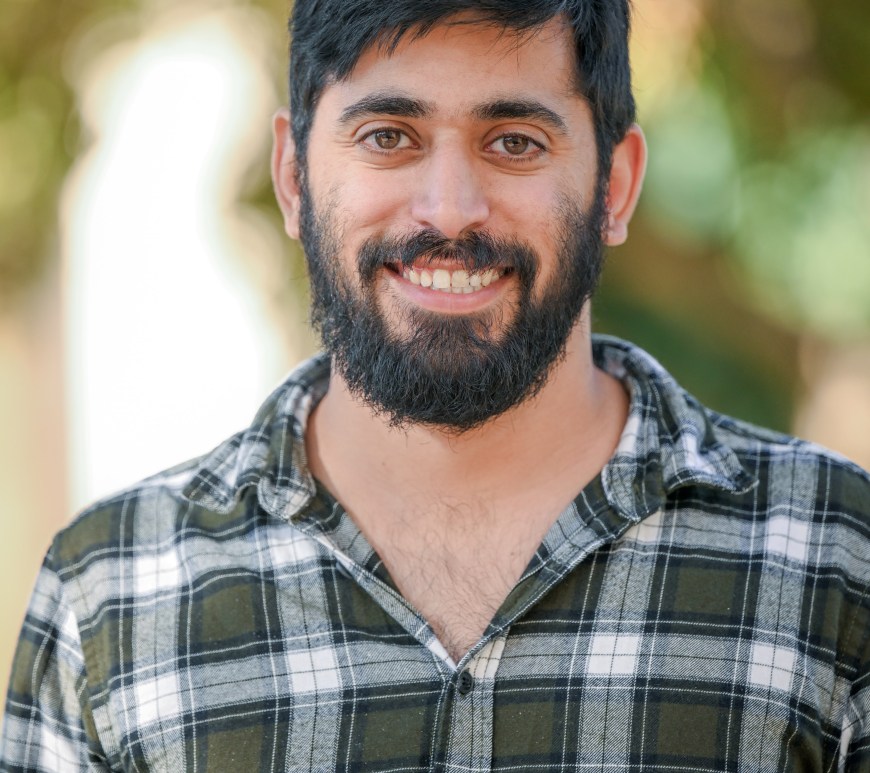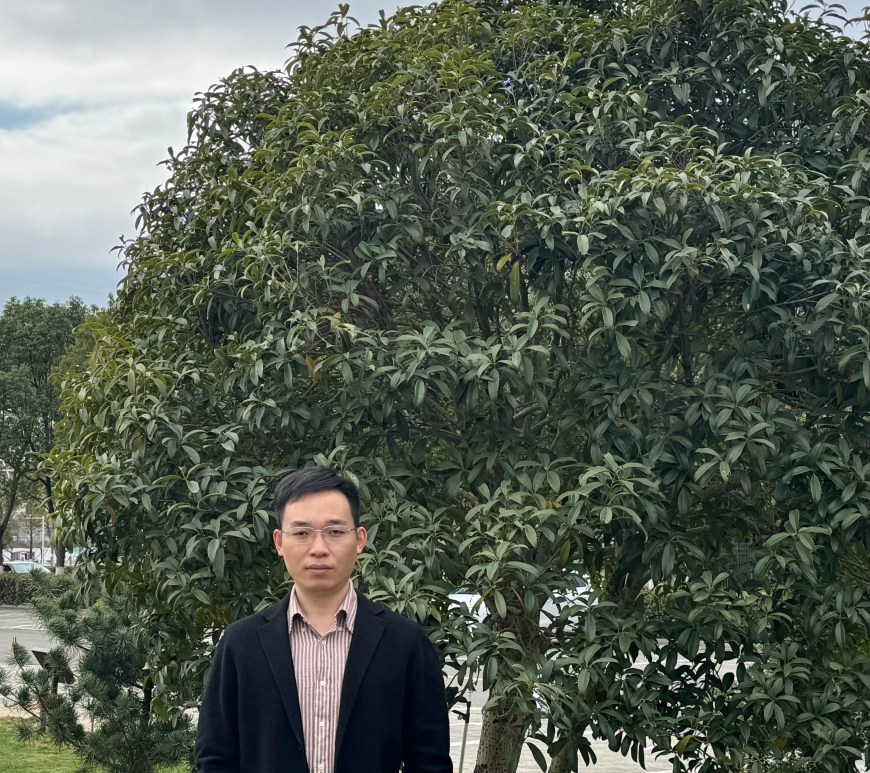
Congratulations to Yuguo Yang, winner of the 2024 Haldane Prize!

Functional Ecology is delighted to announce that the winner of the 2024 Haldane Prize is Yuguo Yang! The Haldane Prize is awarded annually for the best paper published in the journal by an early career researcher. Winner: Yuguo Yang Research: Trade-offs in rooting strategy dimensions along an edaphic gradient in a grassland ecosystem Yuguo is a postdoctoral scholar at Lawrence Berkeley National Laboratory working with Dr. Romy … Continue reading Congratulations to Yuguo Yang, winner of the 2024 Haldane Prize!

Stephanie Chia: Mechanistic understanding of how temperature and its variability shape body size composition in moth assemblages

2024 HALDANE PRIZE SHORTLIST: Stephanie Chia discusses her paper “Mechanistic understanding of how temperature and its variability shape body size composition in moth assemblages“, which has been shortlisted for Functional Ecology’s 2024 Haldane Prize for Early Career Researchers: About the paper Have you ever watched a diverse array of moths gather around a glowing light in the mountains at night? And if you head up … Continue reading Stephanie Chia: Mechanistic understanding of how temperature and its variability shape body size composition in moth assemblages

Tomonari Matsuo: Herbaceous species and dry forest species have more acquisitive leaf traits than woody species and wet forest species

2024 HALDANE PRIZE SHORTLIST: Tomonari Matsuo discusses his paper “Herbaceous species and dry forest species have more acquisitive leaf traits than woody species and wet forest species“, which has been shortlisted for Functional Ecology’s 2024 Haldane Prize for Early Career Researchers: About the author Having grown up in the mountainous region of Saitama, Japan, I developed a deep appreciation for nature from an early age. … Continue reading Tomonari Matsuo: Herbaceous species and dry forest species have more acquisitive leaf traits than woody species and wet forest species

Pamela Medina-van Berkum: Plant geographic distribution influences chemical defences in native and introduced Plantago lanceolata populations

2024 HALDANE PRIZE SHORTLIST: Pamela Medina-van Berkum discusses her paper “Plant geographic distribution influences chemical defences in native and introduced Plantago lanceolata populations“, which has been shortlisted for Functional Ecology’s 2024 Haldane Prize for Early Career Researchers: About the paper Plants face many challenges when they spread to new places. Our research focused on a plant called ribwort plantain (Plantago lanceolata), which is common across … Continue reading Pamela Medina-van Berkum: Plant geographic distribution influences chemical defences in native and introduced Plantago lanceolata populations

Yunxian Xu: Mycorrhizal fungi alter root exudation to cultivate a beneficial microbiome for plant growth

In this blog post, Yunxian Xu discusses his study “Mycorrhizal fungi alter root exudation to cultivate a beneficial microbiome for plant growth“, which has been shortlisted for Functional Ecology’s 2023 Haldane Prize for Early Career Researchers. About the paper: Arbuscular mycorrhizal (AM) fungi are a class of soil microorganisms that are widespread in terrestrial ecosystems and can form a reciprocal symbiotic relationship with most terrestrial … Continue reading Yunxian Xu: Mycorrhizal fungi alter root exudation to cultivate a beneficial microbiome for plant growth

Spencer Virgin: Hot limpets go south: Fine-scale thermal heterogeneity drives summertime limpet distributions

In this blog post, Spencer Virgin, a postdoctoral fellow at the University of Canterbury, New Zealand, discusses his study “Behavioural thermoregulation and food availability drive fine-scale seasonal habitat partitioning in limpets”, which has been shortlisted for Functional Ecology’s 2023 Haldane Prize for Early Career Researchers About the Research Most research on the effect of climate change and extreme heat on organism distributions focuses only on … Continue reading Spencer Virgin: Hot limpets go south: Fine-scale thermal heterogeneity drives summertime limpet distributions

Ryan Stephens: Importance of tissue, trophic level, and diet source in shaping variation in isotopic trophic discrimination factors

In this post, Ryan Stephens, an ecologist at East Tennessee State University, discusses his review paper “Meta-analysis and critical review of trophic discrimination factors (Δ13C and Δ15N): Importance of tissue, trophic level and diet source“. This paper has been shortlisted for Functional Ecology’s 2023 Haldane Prize for Early Career Researchers. About the Paper Naturally occurring stable isotopes, especially carbon (13C/12C, expressed as δ13C) and nitrogen … Continue reading Ryan Stephens: Importance of tissue, trophic level, and diet source in shaping variation in isotopic trophic discrimination factors

Leo Ohyama: Navigating the ecological traits of insect societies

In this blog post, Leo Ohyama, a PhD candidate, discusses his study “Ecological traits of social insects: Colony, queen and worker size relationships reveal a nexus trait with broad ecological relevance“, which has been shortlisted for Functional Ecology’s 2023 Haldane Prize for Early Career Researchers. About the Paper Trait-based approaches in ecology allow researchers to associate ecological characteristics spanning phenology, morphology, and physiology to species … Continue reading Leo Ohyama: Navigating the ecological traits of insect societies

Félix P. Leiva: Cell Size is More Important in Conditions of Low Oxygen

In this post, Félix P. Leiva, Postdoctoral Fellow at the Alfred Wegener Institute, Germany, discusses his article “The role of cell size in shaping responses to oxygen and temperature in fruit flies“, which has been shortlisted for the Haldane Prize, Functional Ecology´s prize for Early Career Researchers. About the paper Our paper makes a significant contribution by unveiling that temperature and oxygen can explain responses … Continue reading Félix P. Leiva: Cell Size is More Important in Conditions of Low Oxygen

Daniel G. Dick: Exploring the relationship between different measures of functional redundancy

In this blog post, Daniel G. Dick, a public education and geoscience communication postdoctoral fellow at McMaster University, Canada, discusses his study “Measuring functional redundancy using generalized Hill numbers”, which has been shortlisted for Functional Ecology’s 2023 Haldane Prize for Early Career Researchers. About the Paper Whether an ecological community can withstand an external perturbation (such as rapid global warming) is thought to be largely … Continue reading Daniel G. Dick: Exploring the relationship between different measures of functional redundancy