Hugo Sentenac: Biofilms, an underrated yet important way of life

In this new post, Hugo Sentenac, a PhD student at Labaoratoire Ecologie Fonctionnelle et Environnement (LEFE), Institut National Polytechnique de Toulouse, France, discusses his review paper: The significance of biofilms to human, animal, plant and ecosystem health—recently shortlisted for the 2022 Haldane Prize for Early Career Researchers. About the paper Microbes are everywhere: in soil, on rocks, in—and on—us, animals, plants, etc. All this is … Continue reading Hugo Sentenac: Biofilms, an underrated yet important way of life

David Villalobos Chaves: Foraging for efficiency—morphological traits provide support for variations in performance of the feeding apparatus in coexisting Neotropical bats

In this new post, David Villalobos Chaves, a PhD student at Department of Biology and Burke Museum of Natural History and Culture, University of Washington, Seattle, WA, USA, discusses his paper: Craniodental traits predict feeding performance and dietary hardness in a community of Neotropical free-tailed bats (Chiroptera: Molossidae)—recently shortlisted for the 2022 Haldane Prize for Early Career Researchers. About the paper Our research adds support … Continue reading David Villalobos Chaves: Foraging for efficiency—morphological traits provide support for variations in performance of the feeding apparatus in coexisting Neotropical bats

Kimberley Lemmen: Surprise! Rapid heritable adaptation can occur without initial standing genetic variation

In this new post, Kimberley Lemmen—a post-doc working at the University of Zurich, Zurich, Switzerland—discusses her paper: Experimental evidence of rapid heritable adaptation in the absence of initial standing genetic variation—recently shortlisted for the 2022 Haldane Prize for Early Career Researchers. About the paper Environmental change presents a fundamental challenge to populations because the traits that previously allowed individuals to grow, survive, and reproduce may … Continue reading Kimberley Lemmen: Surprise! Rapid heritable adaptation can occur without initial standing genetic variation

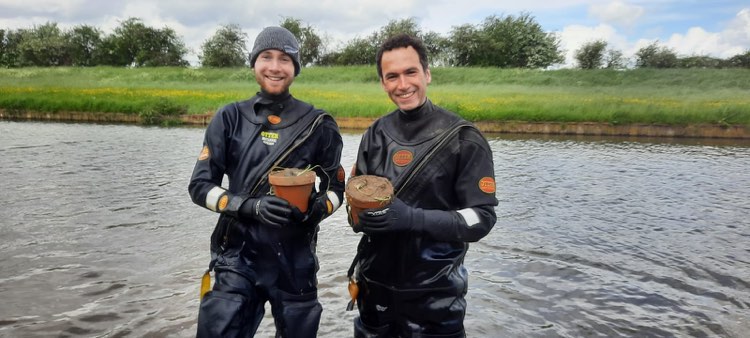
Joshua Brian: Parasites flex their mussels to influence ecosystem function

In this new post, Joshua Brian, a new ecological researcher working at King’s College London,  UK, discusses his paper: Parasitism dramatically alters the ecosystem services provided by freshwater mussels—recently shortlisted for the 2022 Haldane Prize for Early Career Researchers. About the paper There is increasing awareness of the importance of parasites in ecosystem structure and function. However, there has been very little work done actually … Continue reading Joshua Brian: Parasites flex their mussels to influence ecosystem function

Aya Permin: Bryophyte-associated nitrogen fixation in a tropical mountain cloud forest—rates and responses to climate change

In this new post, Aya Permin, a new ecological researcher at the University of Copenhagen, Denmark, discusses her paper—High nitrogen-fixing rates associated with ground-covering mosses in a tropical mountain cloud forest will decrease drastically in a future climate—which has won the 2022 Haldane Prize for Early Career Researchers! About the paper Bryophytes (mosses, hornworts, and liverworts) are known to host nitrogen (N2)-fixing bacteria. These bacteria … Continue reading Aya Permin: Bryophyte-associated nitrogen fixation in a tropical mountain cloud forest—rates and responses to climate change

2022 Haldane Prize Shortlist: Functional Ecology’s Award for Early Career Researchers

The Haldane Prize is awarded by the British Ecological Society each year for the best paper in Functional Ecology written by an early career author. Last year’s winner was Max Mallen-Cooper for their paper: Tissue chemistry of biocrust species along an aridity gradient and comparison to vascular plant leaves Here is the shortlist for the 2022 Haldane Prize. Alice Walker Indirect control of decomposition by an invertebrate … Continue reading 2022 Haldane Prize Shortlist: Functional Ecology’s Award for Early Career Researchers

Diego Anjos: The journey of an early career researcher from the global south during the COVID-19 pandemic

For Black History Month, the British Ecological Society (BES) journals are celebrating the work of Black ecologists from around the world and sharing their stories. The theme for UK Black History Month this year is Time for Change: Action Not Words. Diego Anjos—a post-doc ecology researcher studying at Universidade Federal de Uberlândia, Brazil—shares his story below. Since my last post during UK Black History Month … Continue reading Diego Anjos: The journey of an early career researcher from the global south during the COVID-19 pandemic

2020 Haldane Prize Shortlist: Functional Ecology’s Award for Early Career Researchers

The Haldane Prize is awarded by the British Ecological Society each year for the best paper in Functional Ecology written by an early career author. The winner of the Haldane Prize 2020 is Renato Morais with his fantastic paper on coral reef energetic shifts following natural disaster. Severe coral loss shifts energetic dynamics on a coral reef – Renato A. Morais – read the blog behind the … Continue reading 2020 Haldane Prize Shortlist: Functional Ecology’s Award for Early Career Researchers

Alex Strauss: disease, diversity and dilution

Dr Alex Strauss  is a Postdoctoral Research Assistant at the University of Minnesota and winner of the 2018 Haldane Prize for Early Career Researchers for his paper, Linking host traits, interactions with competitors and disease: Mechanistic foundations for disease dilution.

In this Insight, he talks about the background behind his paper, digs into disease, dilution and biodiversity, and what he wants to see happen next in this area.

Continue reading “Alex Strauss: disease, diversity and dilution”

Women in Science – Incentives don’t match the goals

For International Women and Girls in Science day we have a guest post from some of the leaders of the 500 Women Scientists movement, Terry Bilinski, Emily Lescak and Kelly Ramirez. Their mission is to serve society by making science open, inclusive, and accessible.

For more than a decade, we have been engaged in a vigorous dialogue about the barriers to creating a more equitable scientific community in terms of gender balance and cultural background. There has been a concerted effort from many different perspectives to better understand and communicate about the issue through original research 1 2 3 4, review articles and reports by think tanks and government agencies 5 6, conference sessions and workshops (for example), not to mention innumerable opinion pieces in publications ranging from Science to US News and World Report to the Huffington Post. Millions of dollars in funding through foundations and government agencies have been dedicated to efforts directed at increasing diversity and equity in STEM. A large majority of the scientific community has raised their hand and said, “Yes, creating equity in the sciences is important.” And yet, the problem still looms large.

Here for International Day of Women and Girls in Science, we explore why advancement incentives have fallen short of making the sciences equitable and inclusive. Continue reading “Women in Science – Incentives don’t match the goals”