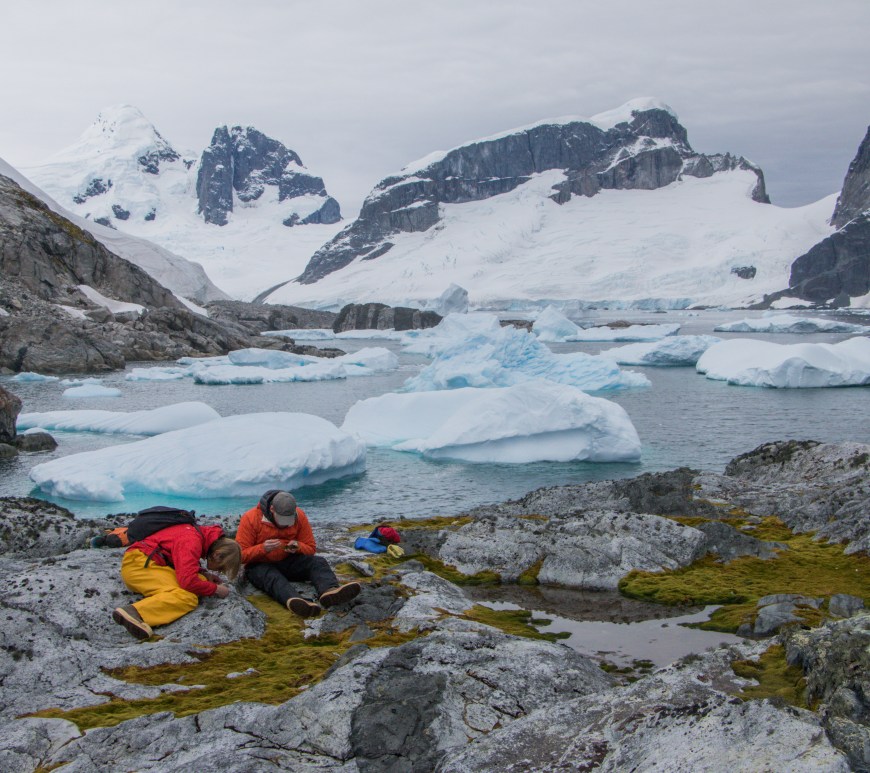
Simulated winter warming negatively impacts survival of Antarctica’s only endemic insect: Podcast Transcript

In this podcast for Functional Ecology, Assistant Editor, Frank Harris, sits down with Jack J. Devlin—an early career researcher from the University of Kentucky—to discuss his recently published paper ‘Simulated winter warming negatively impacts survival of Antarctica’s only endemic insect.’ With warmer winters expected to become more common with climate change, this study’s results indicate that winter warming could negatively impact cold-adapted insects like the … Continue reading Simulated winter warming negatively impacts survival of Antarctica’s only endemic insect: Podcast Transcript

Emerging relationships among microbes, soil carbon storage and climate change: Podcast transcript

In this podcast for Functional Ecology, Assistant Editor, Frank Harris, sits down with two Guest Editors—Pablo García-Palacios and Ji Chen— to discuss our recently published Special Feature on soil carbon storage. The Special Feature identifies emerging findings from soil microbial ecology and climate change research that can be used to reduce uncertainty if incorporated into theory and models. Frank: Today, I have Pablo García-Palacios and … Continue reading Emerging relationships among microbes, soil carbon storage and climate change: Podcast transcript

Pablo García-Palacios & Ji Chen: Emerging relationships among soil microbes, carbon dynamics and climate change

In this new post, Pablo García-Palacios, from the Institute of Agricultural Sciences, Spain, and Ji Chen from Aarhus University, Denmark, who both serve as Associate Editors for Functional Ecology, present the Special Feature ‘Emerging relationships among soil microbes, carbon dynamics and climate change’. They talk about how they conceived the Special Feature, how they selected authors and topics, and how they coordinated with the contributing … Continue reading Pablo García-Palacios & Ji Chen: Emerging relationships among soil microbes, carbon dynamics and climate change

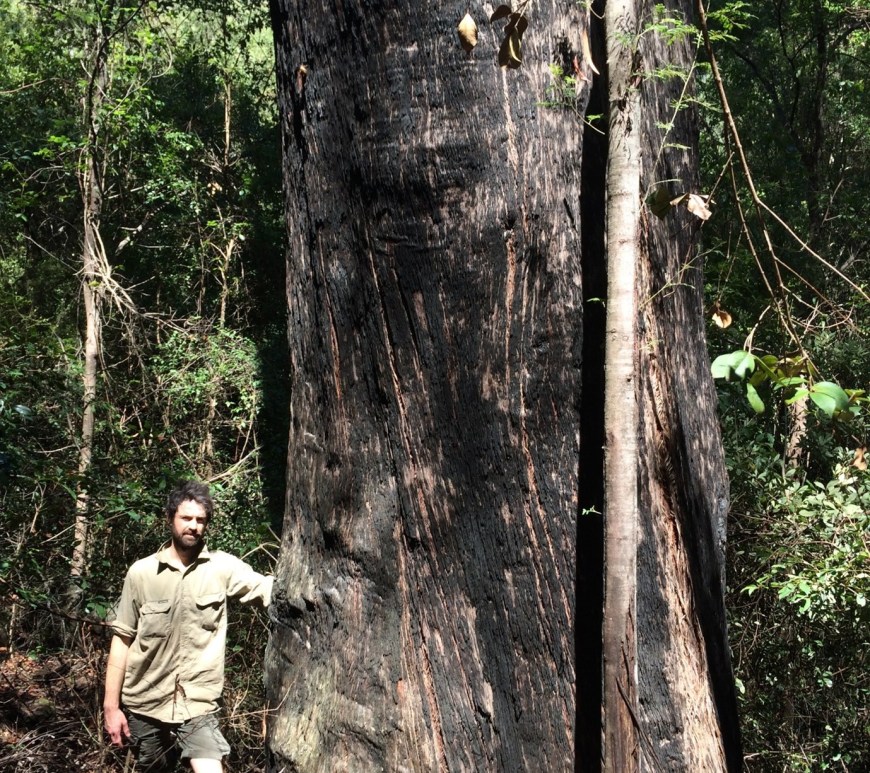
Eli Bendall: Not so tall (tree) tales from the glasshouse

In this new post, Eli Bendall from Western Sydney University presents his last paper ‘Growth enhancements of elevated atmospheric [CO2] are reduced under drought-like conditions in temperate eucalypts’. He discusses the interacting impact of CO2 rise and drought for woody plants, highlights why sunny days can be problematic for ecologists, and shares his unconditional love for eucalyptus. About the paper Our work investigated the interacting … Continue reading Eli Bendall: Not so tall (tree) tales from the glasshouse

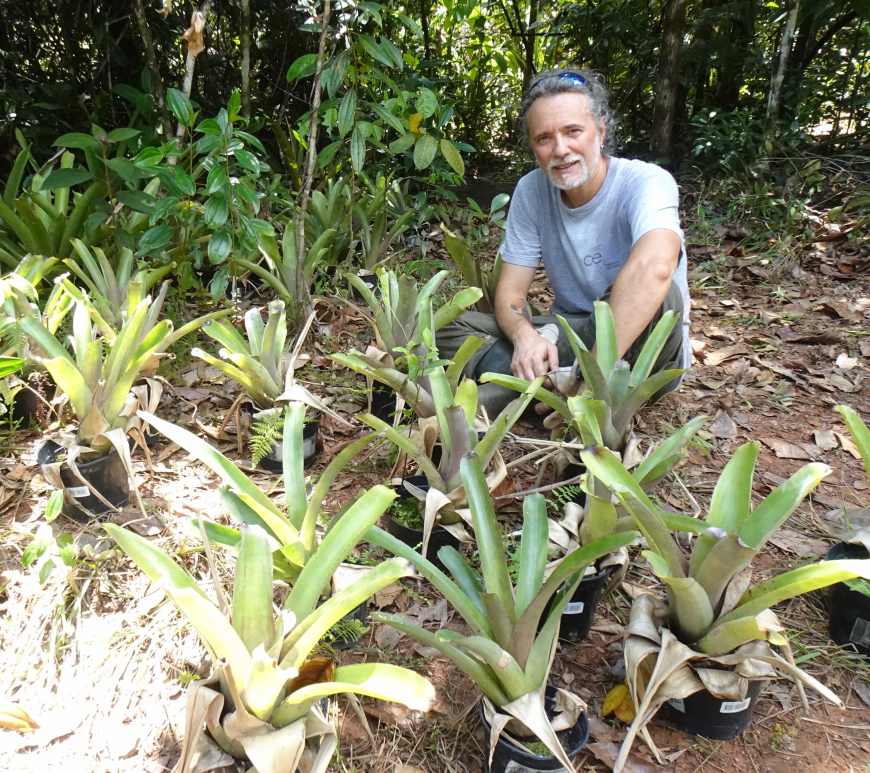
Régis Céréghino: Functional redundancy is an insurance against the effects of precipitation change on Neotropical invertebrate communities

In this new post, Professor Régis Céréghino, from University Paul Sabatier (Toulouse, France), presents his paper ‘Functional redundancy dampens precipitation change impacts on species-rich invertebrate communities across the Neotropics’, discusses the importance of collaboration for answering general ecological questions and highlights the necessity to know your study system. About the paper The aim of this study was to understand how biogeographic contexts influence invertebrate community … Continue reading Régis Céréghino: Functional redundancy is an insurance against the effects of precipitation change on Neotropical invertebrate communities

Laura Castaneda-Gomez: Roots may not be key drivers of soil responses to elevated CO2 in a phosphorus-limited forest

In this new post, Laura Castañeda-Gómez, a new ecological researcher working at The University of Toronto, Canada, shares their paper: The influence of roots on mycorrhizal fungi, saprotrophic microbes and carbon dynamics in a low‐phosphorus Eucalyptus forest under elevated CO2—recently shortlisted for the Haldane Prize for Early Career Researchers. Last February, the Earth’s atmosphere reached a new record high CO2 concentration of almost 422 ppm. … Continue reading Laura Castaneda-Gomez: Roots may not be key drivers of soil responses to elevated CO2 in a phosphorus-limited forest

Martha Muñoz: Vulnerability of tropical anoles to environmental warming

In this blog post, Dr. Martha Muñoz, Assistant Professor of Ecology and Evolutionary Biology at Yale University, USA, discusses her recent paper, “The multidimensional (and contrasting) effects of environmental warming on a group of montane tropical lizards.” Este blog también está disponible en español aquí. About the paper Our study centred around exploring vulnerability to environmental warming in a group of montane tropical anoles (lizards) … Continue reading Martha Muñoz: Vulnerability of tropical anoles to environmental warming

Martha Muñoz: Vulnerabilidad de los anolis tropicales al calentamiento ambiental

En esta publicación de blog, la Dra. Martha Muñoz, profesora asistente de Ecología y Biología Evolutiva en la Universidad de Yale, EE. UU., analiza su artículo reciente, “The multidimensional (and contrasting) effects of environmental warming on a group of montane tropical lizards.” Una versión en inglés de esta publicación de blog está disponible para leer aquí. Sobre el papel Nuestro estudio se centró en la … Continue reading Martha Muñoz: Vulnerabilidad de los anolis tropicales al calentamiento ambiental

Fernanda Barros

Fernanda Barros: What can plant life history tell us?

Fernanda Barros, postdoc at University of Exeter, talks in this new post about her recent paper ‘Phytogeographic origin determines Tropical Montane Cloud Forest hydraulic trait composition’. She highlights the importance of functional traits for ecology, discusses the importance of drought tolerance in tropical mountain cloud forests and calls for more efforts to reduce inequality in science. About the paper Our paper investigates traits of important … Continue reading Fernanda Barros: What can plant life history tell us?

Marina Dacal

Marina Dacal: Can past climatic conditions influence soil microbes and functioning responses to present extreme climatic events?

In this new post, PhD Marina Dacal from University of Alicante presents her last work ‘Climate change legacies contrastingly affect the resistance and resilience of soil microbial communities and multifunctionality to extreme drought’. She talks about the importance of looking at multiple components when doing ecology, highlights the importance of drylands and shares her new-found passion for knitting. About the paper Soil microbes are the … Continue reading Marina Dacal: Can past climatic conditions influence soil microbes and functioning responses to present extreme climatic events?