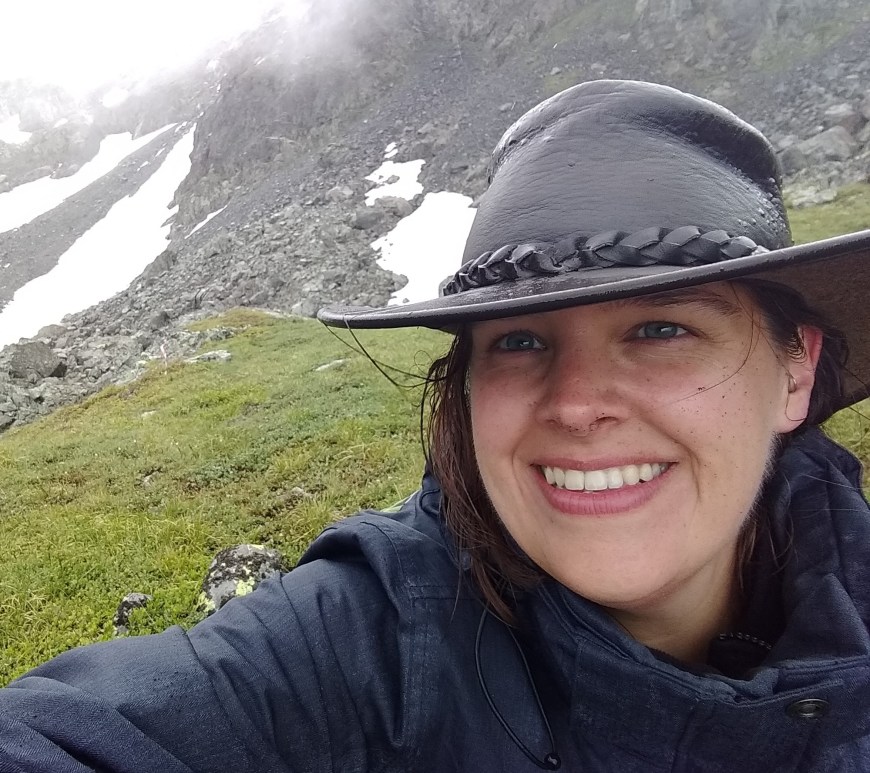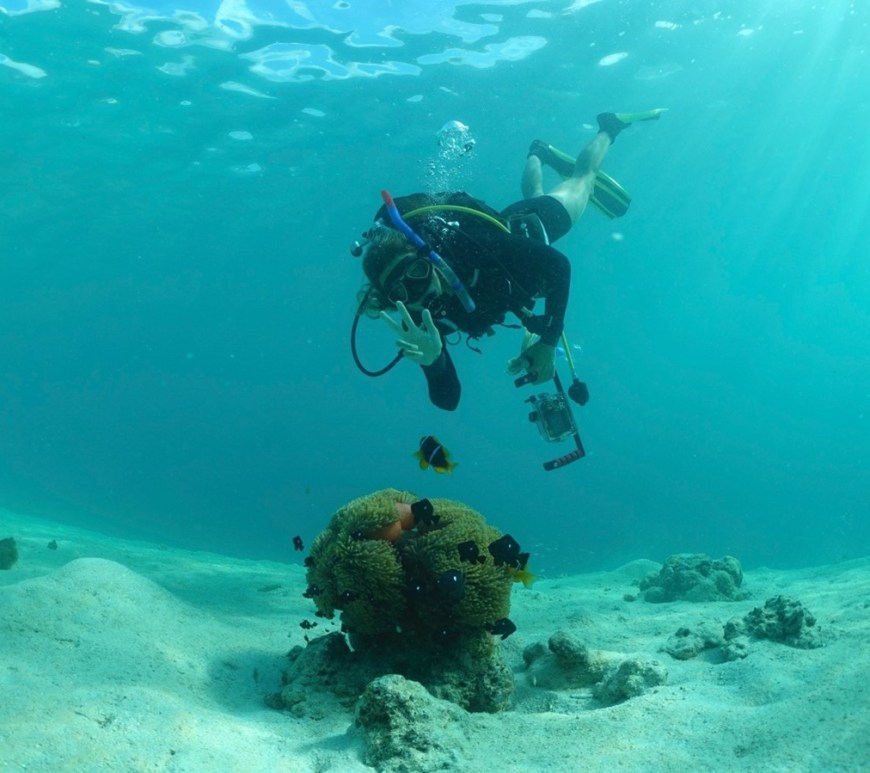
Esther Sebastián-González: Waterbirds are also vital seed dispersers

Esther Sebastián-González, postdoc researcher presents her paper ‘Waterbird seed‐dispersal networks are similarly nested but less modular than those of frugivorous birds, and not driven by functional traits’, and show us how waterbirds paved her road into ecology.

Esther Sebastián-González in a fieldwork trip in Mongolia (Author JM Pérez-García)

Continue reading “Esther Sebastián-González: Waterbirds are also vital seed dispersers”
Jo Carpenter with a kakapo, a native seed predator endemic to New Zealand. Credit: Theo Thompson

Jo Carpenter: Can introduced seed predators compensate for the loss of native seed predators on islands?

Jo Carpenter with a kakapo, a native seed predator endemic to New Zealand. Credit: Theo Thompson

Dr. Jo Carpenter, a postdoctoral researcher at Manaaki Whenua – Landcare Research discusses with us her recently accepted article, “The forgotten fauna: native vertebrate seed predators on islands”, as well as her favourite part about being an ecologist and conservationist.

Continue reading “Jo Carpenter: Can introduced seed predators compensate for the loss of native seed predators on islands?”
Configuring the thermal camera in preparation at dawn in preparation

Benjamin Blonder: thermal ecology, from deserts to mountains

Dr. Benjamin Blonder from University of California at Berkeley presents his last publication ‘Low predictability of energy balance traits and leaf temperature metrics in desert, montane, and alpine plant communities‘, one of his first steps in the world of thermal ecology. He shares his experience about how little actually we know about how plants manage leaf temperature and the hard but very rewarding fieldwork at Rocky Mountains.

Benjamin Blonder
Benjamin Blonder
Continue reading “Benjamin Blonder: thermal ecology, from deserts to mountains”

Florian Roth: carbon, coral and communities

Florian Roth, postdoc researcher talks about his paper High rates of carbon and dinitrogen fixation suggest a critical role of benthic pioneer communities in the energy and nutrient dynamics of coral reefs, what makes this work different and what got him into ecology.

Dr. Florian Roth. [Photo credit: Yusuf El-Khaled]

Continue reading “Florian Roth: carbon, coral and communities”

Laura García-Velázquez: Evaluating the drivers of soil P pools in coastal ecosystems

Laura García-Velázquez, a graduate student talks about her recent paper Climate and soil micro‐organisms drive soil phosphorus fractions in coastal dune systems– the first article published from her PhD! About the paper The importance of understanding soil P cycle is likely to increase in the coming decades due to the increasing atmospheric deposition of N caused by agricultural and industrial activities. Due to this, it … Continue reading Laura García-Velázquez: Evaluating the drivers of soil P pools in coastal ecosystems

Sarah Donelan: Sex-specific differences in prey response to predators

Sarah holding her study organism, Nucella lapillus. Photo credit: Chris York.

Dr. Sarah Donelan, a Postdoctoral Fellow at the Smithsonian Environmental Research Center, discusses her paper, “Sex-specific differences in the response of prey to predation risk”, as well as her current research interests and how she became involved in ecological research.

Continue reading “Sarah Donelan: Sex-specific differences in prey response to predators”

Cathy Cavallo: Penguin-derived CPUE to monitor inshore ecosystems

Dr. Cathy Cavallo, Ecologist and Science Communicator for Remember the Wild, discusses with us her recent publication, “Quantifying prey availability using the foraging plasticity of a marine predator, the little penguin”, a study she conducted as part of her PhD research with Monash University and Phillip Island Nature Parks.  She further shares with us the importance of this work, along with some of the issues her team faced collecting fecal samples from penguins!

This very healthy penguin chick was a whopping 1.4 kilograms. Chicks usually reach around 800-1100 grams before fledging.
Credit: Sonia Sánchez

Continue reading “Cathy Cavallo: Penguin-derived CPUE to monitor inshore ecosystems”
Shichang Zhang (credit: Luyao Chen)

Shichang Zhang: Spiders, detritus decorations and avoiding predators

Dr. Shichang Zhang of Hubei University discusses with us his team’s most recently accepted article, “Detritus decorations as the extended phenotype deflect avian predator attack in an orb-web spider”, his interest in the natural world, as well as his opinion on the best and worst parts about being an ecologist.

Shichang Zhang (credit: Luyao Chen)
Continue reading “Shichang Zhang: Spiders, detritus decorations and avoiding predators”
Anderson Feijó. Photo credit: Yuhsin Chen.

Anderson Feijó: Pika morphology reflects life at high elevations

Dr. Anderson Feijó, a postdoctoral researcher at the Beijing’s Institute of Zoology of the Chinese Academy of Sciences, discusses his article, “Divergent adaptations in resource-use traits explain how pikas thrive on the roof of the world”, his current research, as well as advice for fellow researchers.

Anderson Feijó. Photo credit: Yuhsin Chen.
Continue reading “Anderson Feijó: Pika morphology reflects life at high elevations”