Laura Ortiz Díaz: Biological soil crusts and neighbour plants strongly affects annual plants living in gypsum drylands

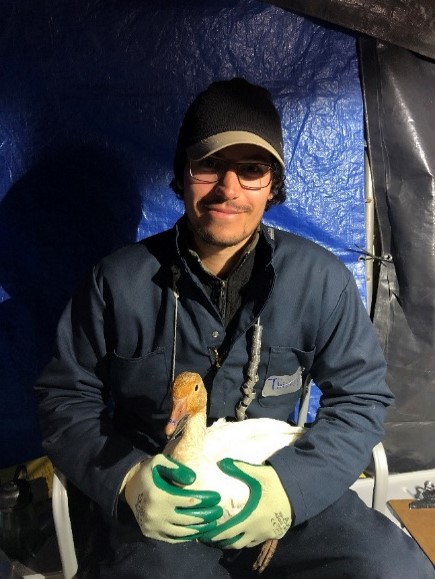
In our latest post, Laura Ortiz Díaz—A PhD student at Universidad Rey Juan Carlos, Spain—presents her new study ‘Functional diversity of experimental annual plant assemblages drives plant responses to biological soil crusts in gypsum systems’. Laura tells us where the idea of the study came from, the importance of biological soil crust for drylands ecology, and how she became hooked on ecology from an early … Continue reading Laura Ortiz Díaz: Biological soil crusts and neighbour plants strongly affects annual plants living in gypsum drylands

Kristiina Visakorpi: The future of Alpine meadows: Can we predict winners and losers in a warmer climate?

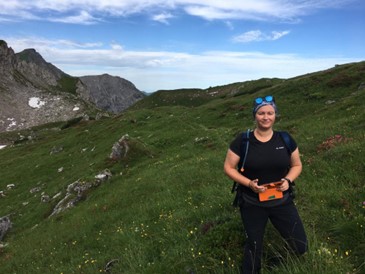
In this new post Kristiina Visakorpi—a postdoc at the Norwegian University of Science and Technology—discusses her last research ‘Eco-physiological and morphological traits explain alpine plant species’ response to warming’. She considers the connections between functional traits and climate change, highlights the importance of eco-physiological traits, and provides some thoughts to fight apathy towards our current environmental crises. About the paper In our paper we investigated … Continue reading Kristiina Visakorpi: The future of Alpine meadows: Can we predict winners and losers in a warmer climate?

Animal Functional Traits: A Functional Ecology Special Focus

In this post, Functional Ecology provides an introduction to each article that can be found in our Animal Functional Traits Special Focus. This collection of studies shows how precise measurements of morphological or physiological traits can increase mechanistic understanding of community assembly across trophic levels, particularly of the mechanisms underpinning large-scale biodiversity patterns. Further, a clearer picture is emerging of systematic animal responses to environmental … Continue reading Animal Functional Traits: A Functional Ecology Special Focus

Rebecca Hewitt: A focus on root-associated fungi informs predictions of plant-soil feedbacks in the boreal forest after fire

In our new post Rebecca Hewitt—Assistant Professor at Amherst College, MA, USA—presents her work ‘Wildfire impacts on root-associated fungi and predicted plant-soil feedbacks in the boreal forest: research progress and recommendations’. She discusses the importance of plant-fungal interactions to cope with fire disturbance and shares her fascination for environmental research. About the paper We wrote a review paper that synthesizes what is currently known about … Continue reading Rebecca Hewitt: A focus on root-associated fungi informs predictions of plant-soil feedbacks in the boreal forest after fire

Daniel Zuleta: Do small-scale changes in topography affect functional trait variability in an aseasonal Amazon forest?

In our newest post Daniel Zuleta—a postdoc researcher at Smithsonian ForestGEO—presents his last work ‘Interspecific and intraspecific variation of tree branch, leaf, and stomatal traits in relation to topography in an aseasonal Amazon forest’. He presents the huge Amacayacu Forest Dynamics Plot, findings about the major impact that tree size exerts on tree functional traits, and how he changed his interests from forest plantations industry … Continue reading Daniel Zuleta: Do small-scale changes in topography affect functional trait variability in an aseasonal Amazon forest?

Luca Carisio: How much nectar is produced when the effect of flower-visiting insects is considered?

About the paper Our paper describes how to estimate the nutritional contribution of plants to pollinators and to other flower-visiting insects. The nutritional contribution of plants to pollinators is usually estimated by measuring—using a mesh bag—the nectar volume produced by flowers isolated for a 24 h period from flower-visiting insects. Many studies adopted this 24 h measure as a proxy of plant nectar production. When … Continue reading Luca Carisio: How much nectar is produced when the effect of flower-visiting insects is considered?

Writefull trial announced on Functional Ecology

We are delighted to announce that we have integrated the language editing software, Writefull, into the online submission system of Functional Ecology.   Writefull is an automatic proofing and editing AI tool trained on published articles from STEM subject areas. It screens text for correctness of grammar, spelling, vocabulary and punctuation, as well more subtle language issues such as style, word order, and phrasing. Submitting authors will be … Continue reading Writefull trial announced on Functional Ecology

Piatã Marques: It is time for efficient diversity actions in academia

For Black History Month, the British Ecological Society (BES) journals are celebrating the work of Black ecologists from around the world and sharing their stories. The theme for UK Black History Month this year is Time for Change: Action Not Words. Piatã Marques—an Assistant Professor at the State University of New York at Buffalo and mentor at the Odu initiative—is an Urban Ecologist that is … Continue reading Piatã Marques: It is time for efficient diversity actions in academia

Nyeema Harris: The reward of choosing passion over precedent

For Black History Month, the British Ecological Society (BES) journals are celebrating the work of Black ecologists from around the world and sharing their stories. The theme for UK Black History Month this year is Time for Change: Action Not Words. Nyeema C. Harris—Director of the Applied Wildlife Ecology Lab in the Yale School of the Environment, USA—shares her story below.                                 Some choices in … Continue reading Nyeema Harris: The reward of choosing passion over precedent

BES Collaborates with The Root Of The Science Podcast for a special panel discussion with Daniel Pauly, Nasiphi Bitani, and Mthokosizi Moyo for BHM 2022

For Black History Month, the British Ecological Society (BES) journals are celebrating the work of Black ecologists from around the world and sharing their stories. The theme for UK Black History Month this year is Time for Change: Action Not Words. In this very special podcast episode, British Ecological Society Journals podcast is collaborating with Anne Chisa, host of The Root Of The Science Podcast, to produce a … Continue reading BES Collaborates with The Root Of The Science Podcast for a special panel discussion with Daniel Pauly, Nasiphi Bitani, and Mthokosizi Moyo for BHM 2022