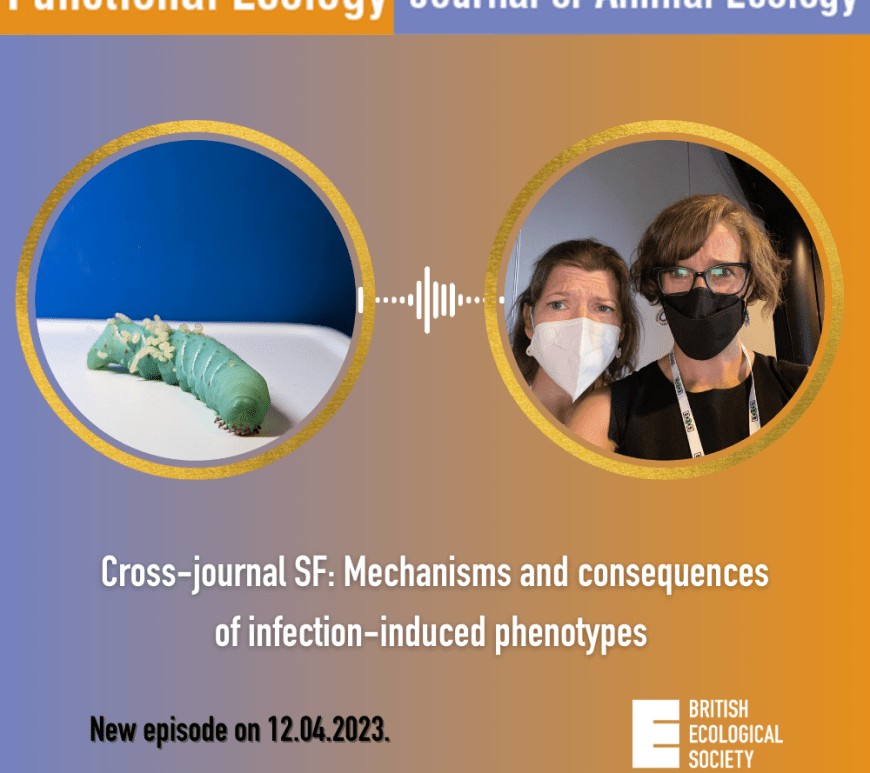
The Mechanisms and Consequences of Infection-Induced Phenotypes: Podcast transcript

In this podcast for Functional Ecology, Assistant Editor, Frank Harris, sits down with Lauren Nadler and Sandra Binning—two of the four guest editors (also Shelley Adamo & Dana Hawley)—to discuss the recently published cross-journal (with Journal of Animal Ecology) Special Feature titled, The Mechanisms and Consequences of Infection-Induced Phenotypes. This special feature highlights recent insights into the ways parasites alter host phenotypes across a range … Continue reading The Mechanisms and Consequences of Infection-Induced Phenotypes: Podcast transcript

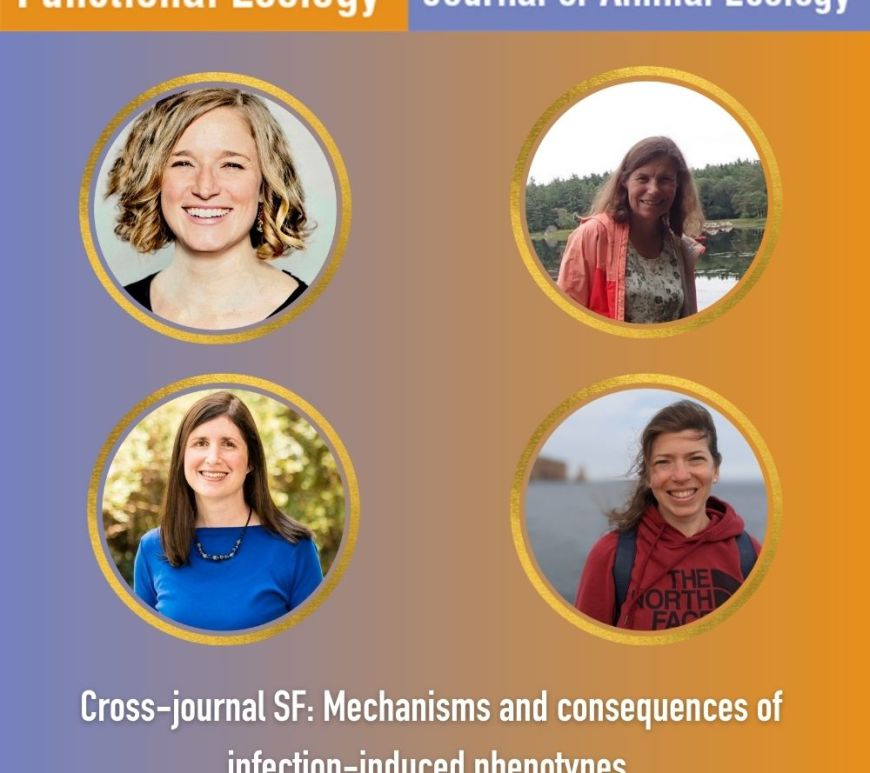
Mechanisms and consequences of infection-induced phenotypes: A Functional Ecology and Journal of Animal Ecology cross-journal special feature

In this post, Functional Ecology and Journal of Animal Ecology showcases each article that can be found in our cross-journal special feature on Mechanisms and consequences of infection-induced phenotypes. This collection of studies brings together biologists working on a wide range of host-parasite systems and topics—from molecular biology and animal behaviour to comparative physiology and community ecology—to synthesize our current state of understanding of host-parasite … Continue reading Mechanisms and consequences of infection-induced phenotypes: A Functional Ecology and Journal of Animal Ecology cross-journal special feature

Matthew Gilbert: Flowers of a South African succulent plant predict tomorrow’s weather, synchronizing flower opening with pollinator activity

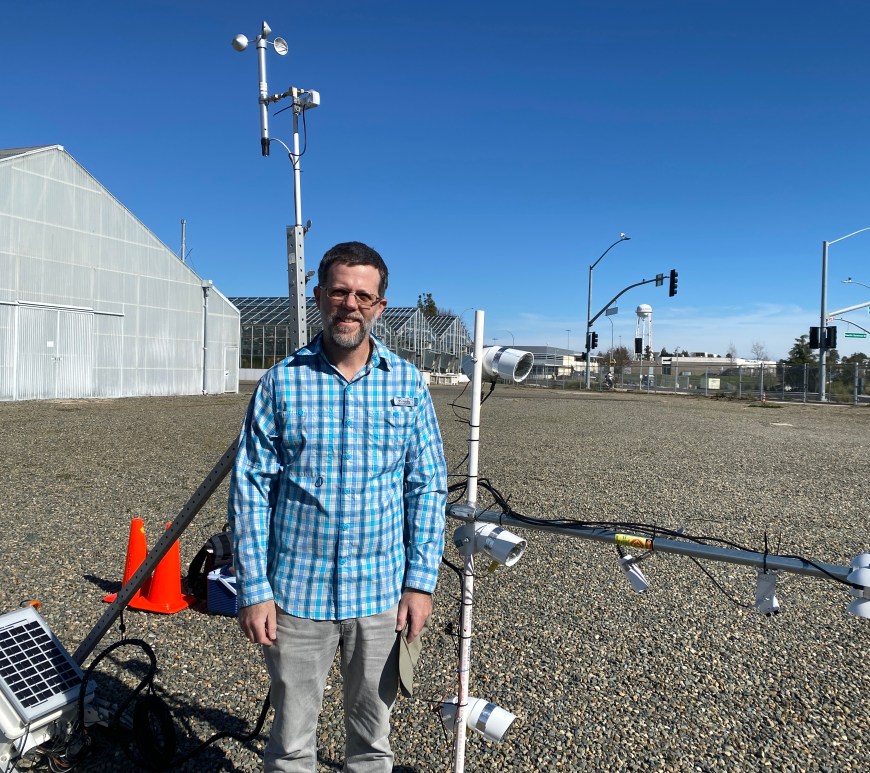
In this new post Matthew Gilbert—Associate Professor at University of California, Davis, CA, USA—presents his recently published paper “Flowers of a South African succulent plant predict tomorrow’s weather, synchronizing flower opening with pollinator activity“. He discusses the connection between phenology and weather, shows how inspiration can come from anywhere, and highlights the importance of observing nature to find interesting research questions. About the paper It’s … Continue reading Matthew Gilbert: Flowers of a South African succulent plant predict tomorrow’s weather, synchronizing flower opening with pollinator activity

Call for proposals! The influence of beneficial fungi on plant-enemy interactions & plant community structure

Ecologists have mused over the mechanisms that structure plant communities for centuries. One such mechanism is negative density dependence, which has been proposed as a an important promoter of tree species diversity across plant communities. However, most negative density-dependence studies to date have focused on the roles played by insects and fungal pathogens. Less attention has been put on the potential for mutualistic fungi to… Continue reading Call for proposals! The influence of beneficial fungi on plant-enemy interactions & plant community structure

Flower patterns improve foraging efficiency in bumblebees by guiding approach flight and landing: Podcast Transcript

In this podcast for Functional Ecology, Assistant Editor, Frank Harris, sits down with Anna Stöckl—a Group Leader at Konstanz University, Germany—to discuss her recently published paper ‘Flower patterns improve foraging efficiency in bumblebees by guiding approach flight and landing’. Anna’s paper shows that flower patterns reduced flower handling time by up to 30%, without a reduction in nectar discovery time. Instead, the patterns were involved … Continue reading Flower patterns improve foraging efficiency in bumblebees by guiding approach flight and landing: Podcast Transcript

Hana Skálová: Cations make a difference: Soil nutrient patches and fine-scale root abundance of individual species in a mountain grassland

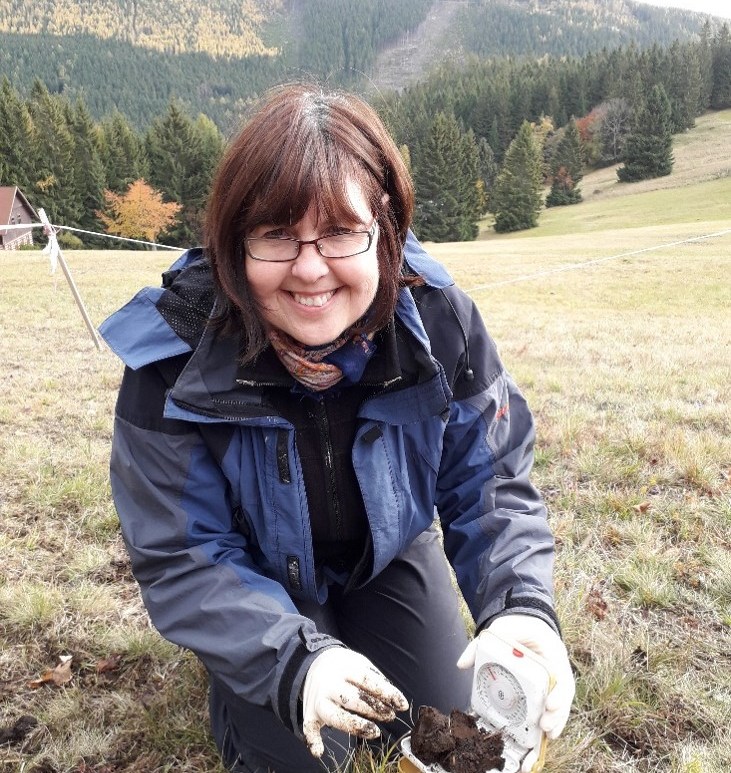
Alt: Stable nutrient patches in the field seem attractive for plant roots In this new post Hana Skálová, from the Institute of Botany in Průhonice (Czech Republic), presents her recently published article “Cations make a difference: Soil nutrient patches and fine-scale root abundance of individual species in a mountain grassland.” She discusses the importance of overlooked nutrients on plant roots, highlights how new technology enables … Continue reading Hana Skálová: Cations make a difference: Soil nutrient patches and fine-scale root abundance of individual species in a mountain grassland

Clea van de Ven: Three travelers discover how plants move during European Survey

In this new post, Clea van de Ven—a PhD candidate at the Royal Netherlands Institute for Sea Research—presents her recently published article ‘Establishing cordgrass plants cluster their shoots to avoid ecosystem engineering’. She presents her experience conducting ecological research in European shores, encourages us to dig into salt marshes, and shares the joy behind coincidences in life. On March 1st, 2019, I first entered the … Continue reading Clea van de Ven: Three travelers discover how plants move during European Survey

2022 Haldane Prize Shortlist: Functional Ecology’s Award for Early Career Researchers

The Haldane Prize is awarded by the British Ecological Society each year for the best paper in Functional Ecology written by an early career author. Last year’s winner was Max Mallen-Cooper for their paper: Tissue chemistry of biocrust species along an aridity gradient and comparison to vascular plant leaves Here is the shortlist for the 2022 Haldane Prize. Alice Walker Indirect control of decomposition by an invertebrate … Continue reading 2022 Haldane Prize Shortlist: Functional Ecology’s Award for Early Career Researchers

Functional Ecology now requires a ‘Replication Statement’ for all submitted Research Articles

In this new post, Functional Ecology announces that a ‘Replication Statement’ is now mandatory for research articles to be considered for publication. Senior Editor for Functional Ecology, Dustin Marshall, provides some background information on this new requirement and a handful examples to assist authors. Check out our updated Author Guidelines if you are looking to submit a manuscript to Functional Ecology. Rationale Measuring independent replicates … Continue reading Functional Ecology now requires a ‘Replication Statement’ for all submitted Research Articles

Liesbeth van den Brink & Rafaella Canessa: Microbial communities prefer high quality food, not specifically the food available “at home”

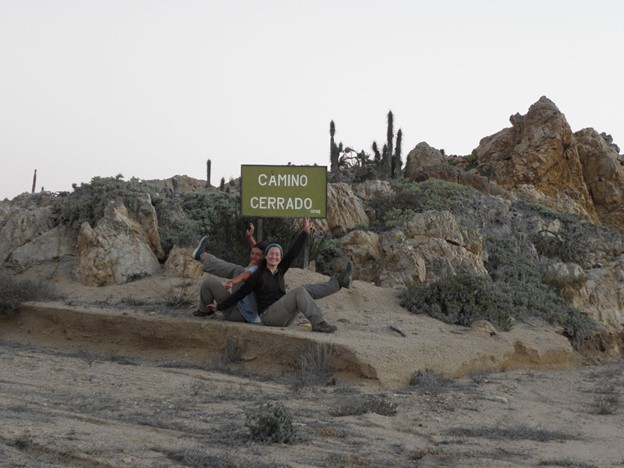
In this new post, post-doctoral friends Liesbeth van den Brink and Rafaella Canessa from the University of Tübingen, Germany, present their recently published paper “No home-field advantage in litter decomposition from the desert to temperate forest.” They discuss the importance of litter characteristics for decomposition, share their experiences with rodents, and celebrate the joy of working with friends. Una versión en Español de esta publicación … Continue reading Liesbeth van den Brink & Rafaella Canessa: Microbial communities prefer high quality food, not specifically the food available “at home”