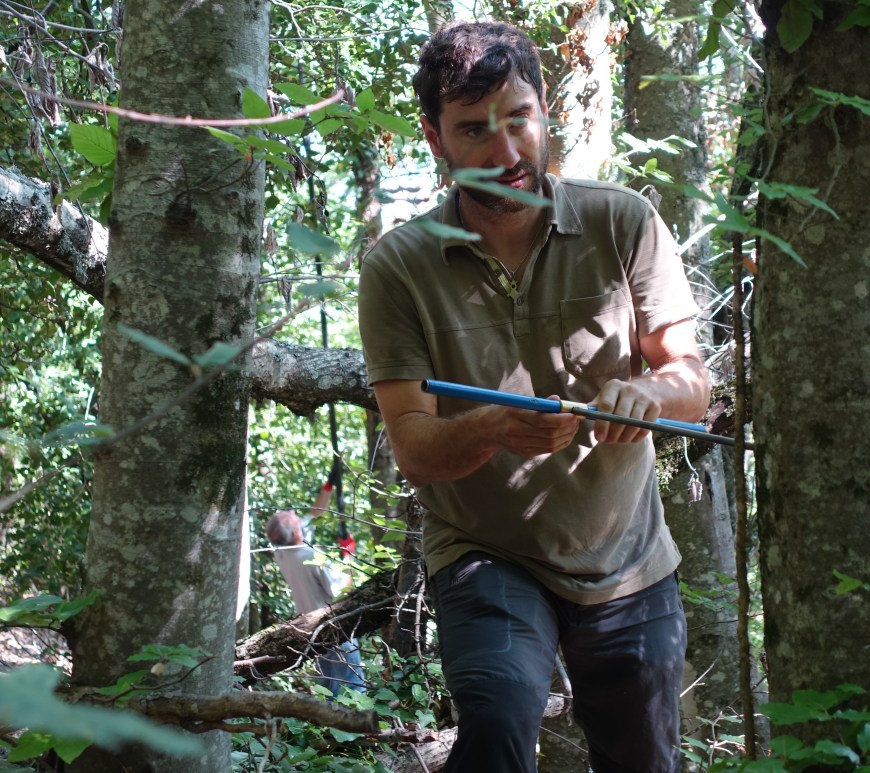
Lead author during an acorn collecting campaign (photo credit: Jean-Marc Louvet).

Thomas Caignard: opposite phenotypic and genetic patterns in Pyrenean oaks

In this new post, Thomas Caignard, post-doc at the University of Bordeaux, presents his latest paper ‘Counter-gradient variation of reproductive effort in a widely distributed temperate oak’, discusses the relevance of the rarely found ‘counter-gradients’ and talks about the multi-disciplinary approach is currently using. About the paper Our paper aims to study the phenotypic and genetic variability of one specific life history traits in trees: … Continue reading Thomas Caignard: opposite phenotypic and genetic patterns in Pyrenean oaks

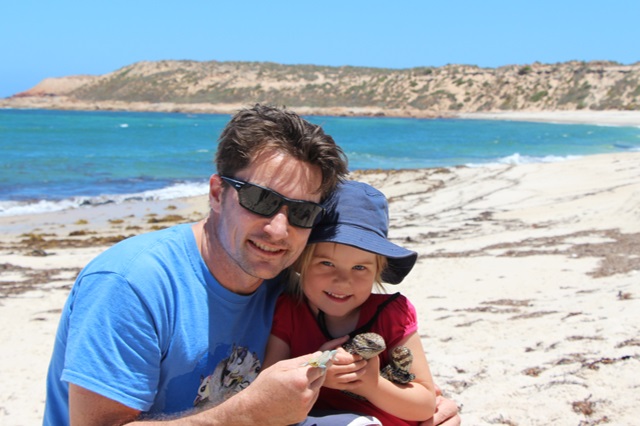
Michael Kearney and his daughter on a road trip catching lizards for measurement of the functional traits involved in water loss.

Michael Kearney: Towards a definition of functional ecology 2.0.

Michael Kearney, professor at the University of Melbourne, presents his latest work ‘Where do functional traits come from? The role of theory and models’. He discusses the importance of definitions in science, remembers the beginnings of our journal and shows his (not so) secret passion for lizards. About the paper What’s your paper about? Our paper is about the concept of a functional trait. This … Continue reading Michael Kearney: Towards a definition of functional ecology 2.0.

Stephanie Schmiege. Photo by Kevin Griffin.

Stephanie Schmiege: leaf morphology impacts respiration in conifers

In this new post, Stephanie C. Schmiege from Columbia University (New York) presents her work on the physiological differences between flat and needle-leaved conifers, how temperature influences plants respiration mechanisms and the big opportunity she had working in tropical forests. I can think of nothing more inspiring than a grove of majestic pines or hemlocks dancing in the wind.  For as long as I can … Continue reading Stephanie Schmiege: leaf morphology impacts respiration in conifers

Xavier Morin in the Grand Luberon forest (South-Eastern France)

Xavier Morin: Finally seeing the forest for the trees? – A model to predict short term functioning and composition of forests

In this post Xavier Morin, Researcher at CEFE, CNRS, University of Montpellier, presents novel perspectives on forest gap models, highlights the complexity of ecological systems and remembers the path that lead him to being a forest scientist. About the paper Forest gap models, the first of which were developed almost 50 years ago, simulate forest dynamics (tree recruitment, growth and death) according to biotic interactions … Continue reading Xavier Morin: Finally seeing the forest for the trees? – A model to predict short term functioning and composition of forests

Author Hao Chen, School of Ecology, Sun Yat-sen University, China

Hao Chen: plants don’t store all trace elements equally

In his latest work, ‘Global resorption efficiencies of trace elements in leaves of terrestrial plants’, professor Hao Chen presents his findings on micronutrient resorption by plants, introduces his future plants in research and calls for collaborators in studying the role of plants in nutrient cycling.    What’s your paper about? This paper reports the global pattern of leaf resorption of trace elements. Specifically, we extracted data … Continue reading Hao Chen: plants don’t store all trace elements equally

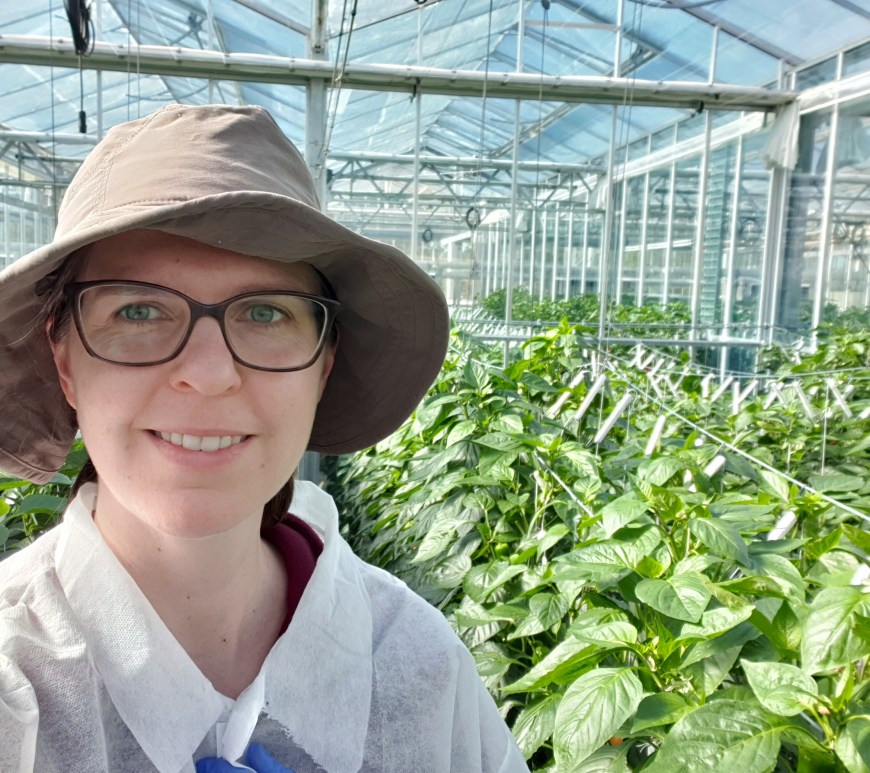
Rebecca at work in the glasshouse in Western Sydney

Rebecca Vandegeer: plant silicon defences against herbivores under drought

In this post Rebecca Vandegeer presents her study ‘Leaf silicification provides herbivore defence regardless of the extensive impacts of water stress’, discusses the importance of Silicon for plant growing and the joy of working with plants and insects  My name is Rebecca Vandegeer and I recently completed a postdoctoral research fellowship with the Hawkesbury Institute for the Environment at Western Sydney University. There is growing … Continue reading Rebecca Vandegeer: plant silicon defences against herbivores under drought

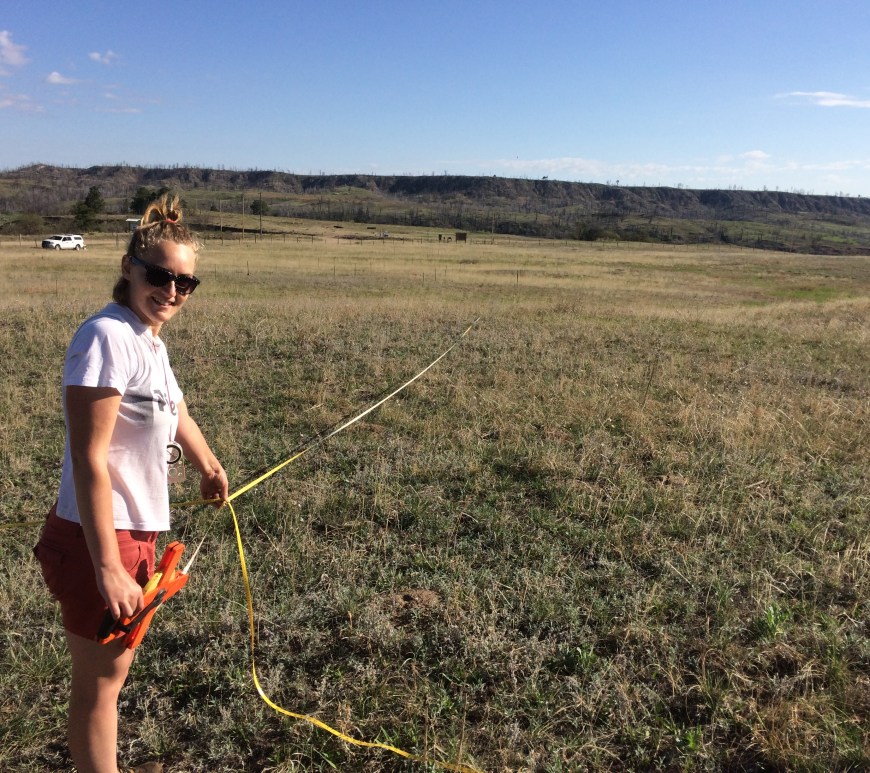
Ellen setting up a transect for the plots

Ellen Welti: Better with a grain of salt. Sodium addition increases leaf herbivory and fungal damage in grasslands

Ellen Welti shares her experience doing her latest research ‘Sodium addition increases leaf herbivory and fungal damage across four grasslands’, the implications of Sodium fertilization for agriculture and her secret cat taming skills. About the paper In this paper, we test how elevated sodium in plants would affect how much herbivorous insects and leaf fungal pathogens consume. This study followed previous research from our group … Continue reading Ellen Welti: Better with a grain of salt. Sodium addition increases leaf herbivory and fungal damage in grasslands

Rosella Guerrieri

Rosella Guerrieri: equal but not equal, new vs long-established forests in Northeastern Spain

Rossella Guerrieri from the University of Bologne, presents her latest study ‘Land-use legacies influence tree water-use efficiency and nitrogen dynamics in recently established European forests’, discusses the importance of long-term effects of global change and provides some advices for anyone following a research career. About the paper Spontaneous forest regrowth is naturally occurring in several areas of the world promoted by on-going global changes, which … Continue reading Rosella Guerrieri: equal but not equal, new vs long-established forests in Northeastern Spain

Molly Roberts, pictured at a mussel farm, estimated the cost of byssus from the experimental data using a Scope For Growth framework. (Photo credit: Hilary Hayford)

Molly Roberts: A network of threads and perspectives, energetic cost of mussel attachment

Emily “Molly” Roberts, postdoctoral fellow at Claremont McKenna College, presents her recent work ‘Resource allocation to a structural biomaterial: induced production of byssal threads decreases growth of a marine mussel, Mytilus trossulus’ where she and her colleagues tested the trade-off between survival and growth of mussels. About the paper This paper is about the energetic ‘investment’ that mussels make to stay anchored to their habitat. … Continue reading Molly Roberts: A network of threads and perspectives, energetic cost of mussel attachment

Study co-authors conducting fieldwork in The Bahamas. Counterclockwise from left is Allison Stringer with a live lionfish (Pterois volitans), Robert Lamb conducting a transect survey, and Lillian Tuttle observing cleaning stations at a coral patch reef. Photo credits: Lillian Tuttle, Tim Pusack, and Severin Vaillancourt, respectively.

Lillian Tuttle: Coral-reef predators must learn that the cleaner goby is a friend, not food

Lillian Tuttle of NOAA’s Pacific Island Regional Office in Honolulu, Hawai‘i talks about the inspiration behind her new research “Differential learning by native versus invasive predators to avoid distasteful cleaning mutualists” and the privilege we have to be able to observe the natural world. About the paper What’s your paper about?My co-authors and I studied the behaviours of invasive lionfish and cleaning mutualists on coral … Continue reading Lillian Tuttle: Coral-reef predators must learn that the cleaner goby is a friend, not food