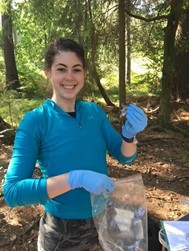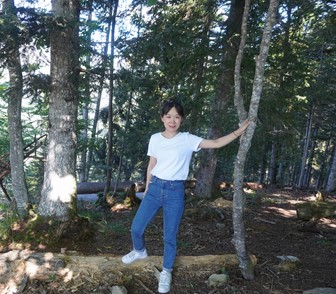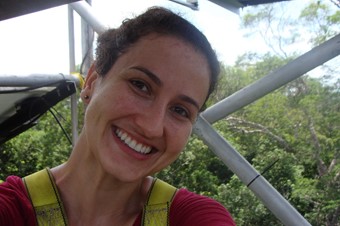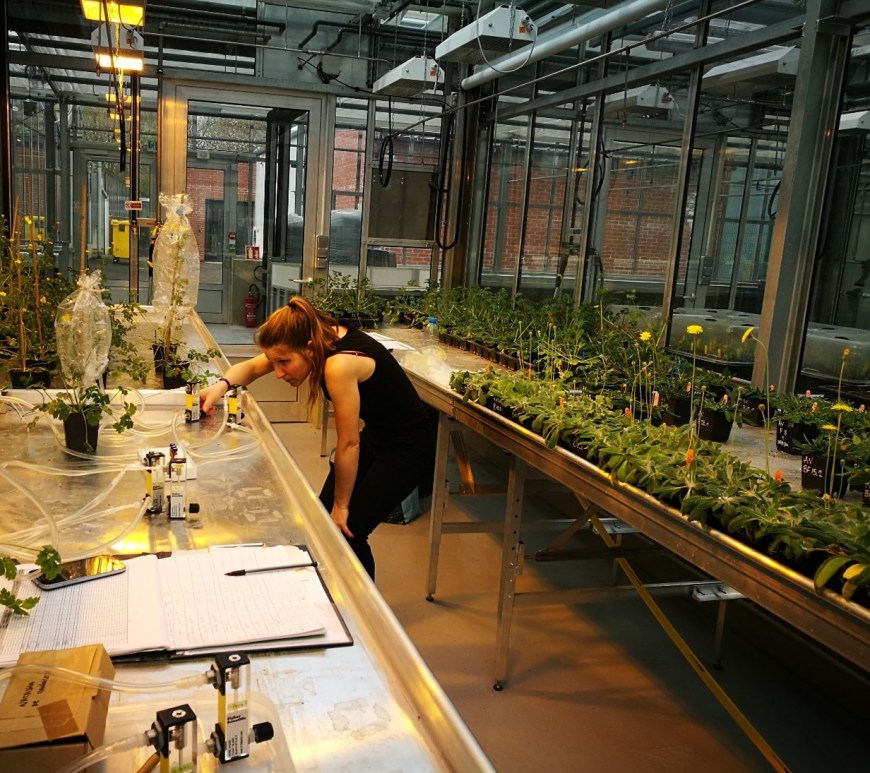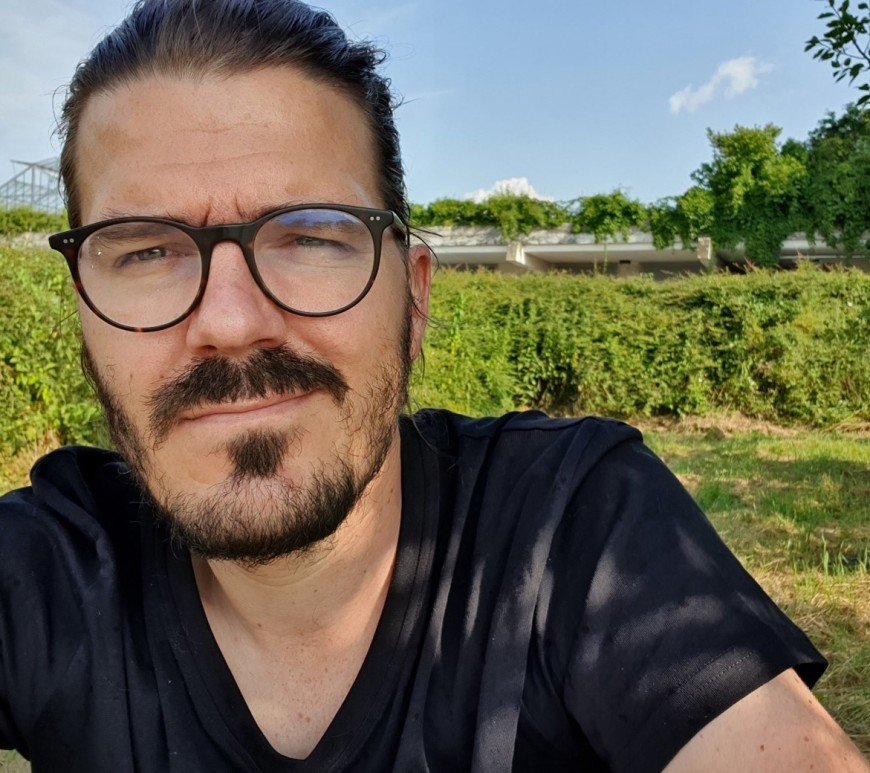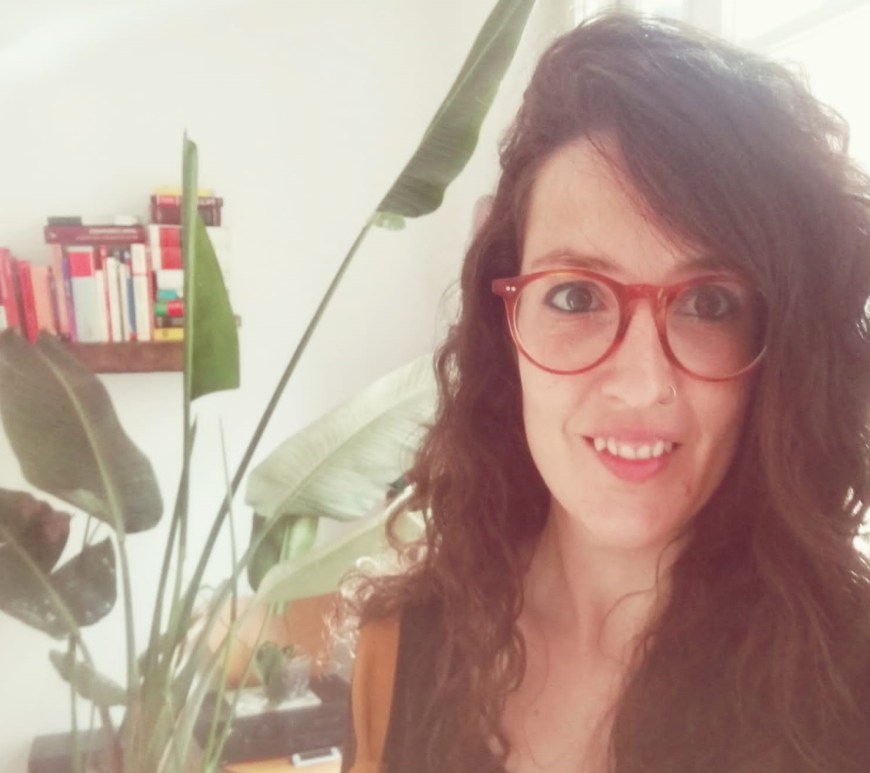
Robin Heinen in his favorite office, outside, at a newly established plant chemodiversity field experiment at Dürnast Experimental Station, Freising, Germany.

Robin Heinen: Feeding from up to bottom: belowground herbivory impacts on plant-soil feedbacks

In this new post, Robin Heinen from the Netherlands Institute of Ecology presents his latest work ‘Foliar herbivory creates subtle soil legacy effects that alter future herbivores via changes in plant community biomass allocation’, discuss the importance of complex interactions to understand ecological communities and shares his worries about not being able to disconnect from nature when you are ecologist. About the paper In early … Continue reading Robin Heinen: Feeding from up to bottom: belowground herbivory impacts on plant-soil feedbacks

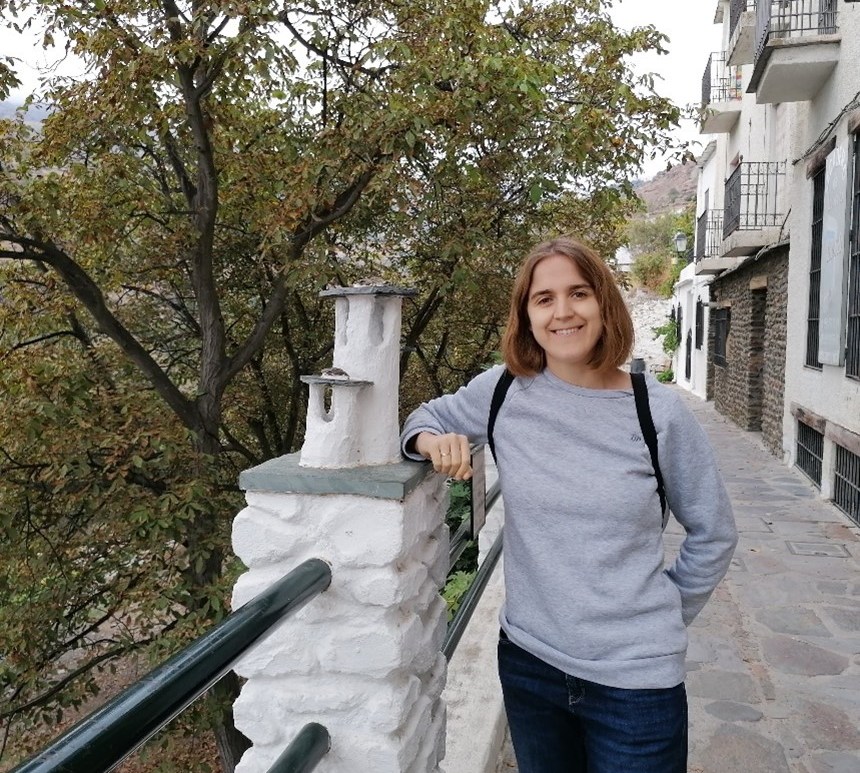
Marina Dacal

Marina Dacal: Can past climatic conditions influence soil microbes and functioning responses to present extreme climatic events?

In this new post, PhD Marina Dacal from University of Alicante presents her last work ‘Climate change legacies contrastingly affect the resistance and resilience of soil microbial communities and multifunctionality to extreme drought’. She talks about the importance of looking at multiple components when doing ecology, highlights the importance of drylands and shares her new-found passion for knitting. About the paper Soil microbes are the … Continue reading Marina Dacal: Can past climatic conditions influence soil microbes and functioning responses to present extreme climatic events?

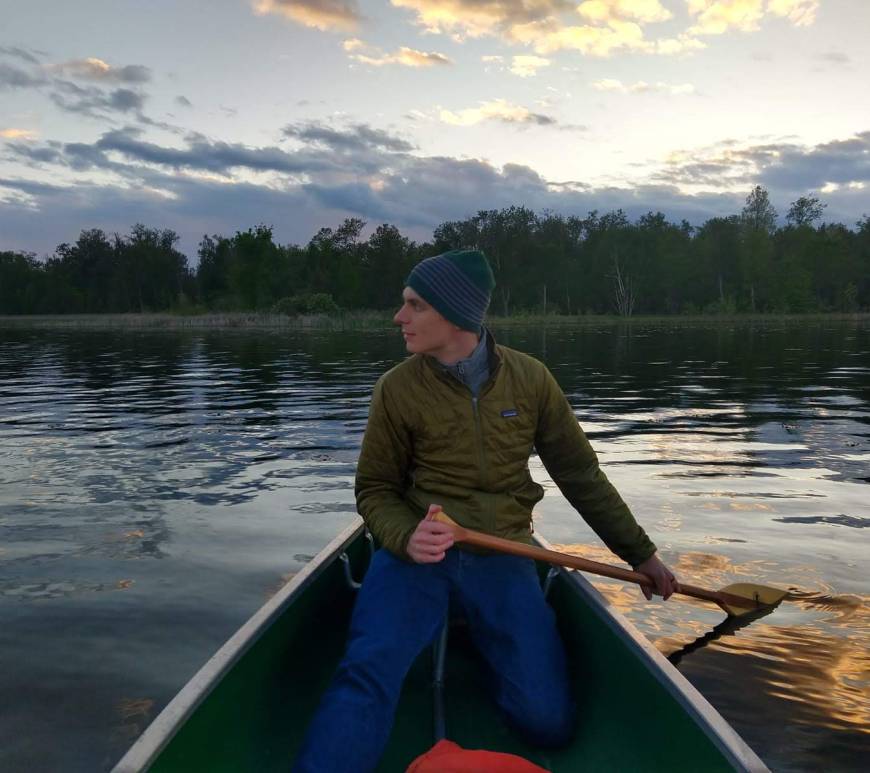
Robert enjoying canoeing

Robert Buchkowski: Weak interactions between herbivores and detritivores in an old-field ecosystem

In our newest post, Robert Buchkowski from University of Wester Ontario presents his last work ‘Weak interactions between strong interactors in an old-field ecosystem: control of nitrogen cycling by coupled herbivores and detritivores’. He discusses the importance of considering multiple interacting organisms when evaluating ecosystem functioning, the challenge to extract earthworms from the soil and warns about doing ecology under the supervision of an expert. … Continue reading Robert Buchkowski: Weak interactions between herbivores and detritivores in an old-field ecosystem

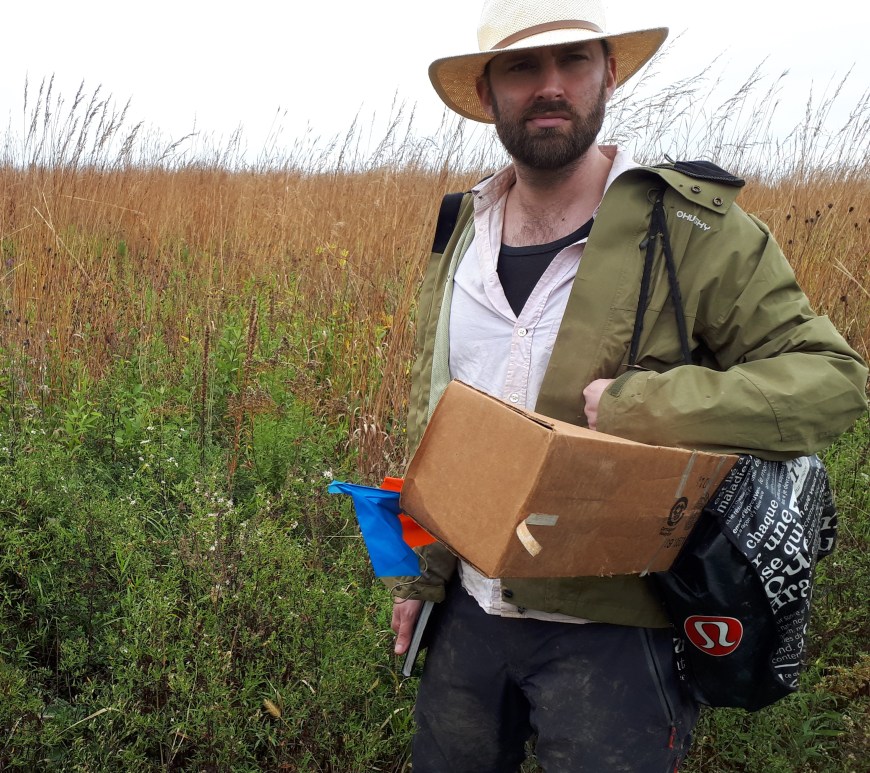
Curtis Lubbe – tired and in a Canadian prairie.

Curtis Lubbe: How much do plants store and why?

In our February cover story, Curtis Lubbe from the Institute of Botany (Czech Academy of Sciences) presents his new work ‘The effect of moisture, nutrients, and disturbance on storage organ size and persistence in temperate herbs’, highlights the importance of looking belowground to understand plants persistence and provides some extra artistic flavour to plant ecology. About the paper This paper is another vital step in … Continue reading Curtis Lubbe: How much do plants store and why?

Teresa Rosas working in their COVID-19 office

Teresa Rosas: single traits are not enough to predict tree growth

In our new post Teresa Rosas, Talent and Gender officer at CREAF (Spain), presents her work ‘Are leaf, stem and hydraulic traits good predictors of individual tree growth?’, discusses the complexity of ecological relationships and shows that there is life for a PhD beyond academia. About the paper In the 21st century, humanity faces the huge challenge to adapt to rapid global change. As ecologists, … Continue reading Teresa Rosas: single traits are not enough to predict tree growth

Alexander Walton with paper wasp workers, temporarily individually housed in deli cups.

Alexander Walton: Nutritional environment is an important regulator of aggression in paper wasps

 Dr. Alexander Walton, a Postdoctoral Researcher working collaboratively at Iowa State University and Cornell University, discusses with us his recent paper, “Resource limitation, intragroup aggression, and brain neuropeptide expression in a social wasp.” Nourishment can affect behaviour in many ways, including social behaviours. In this study, my co-author and I explored the link between a social animal’s nutritional environment and how cooperative or aggressive they … Continue reading Alexander Walton: Nutritional environment is an important regulator of aggression in paper wasps

Beetle replicas with a bird predation attempt (left) indicated by the beak marks across the wings and head and a rodent (right) indicated with the incisor teeth marks in the clay.

Amanda Franklin: Reflecting on mirror camouflage

Our cover story for January 2022 is all about the dazzling world of mirror camouflage. Amanda Franklin of University of Melbourne tells us about her latest research “Cracks in the mirror hypothesis: High specularity does not reduce detection or predation risk” and explains why all may not be as it seems. How can an animal make itself invisible? Perhaps by perfectly mimicking a leaf or … Continue reading Amanda Franklin: Reflecting on mirror camouflage

Hannah White

Hannah White: Looking at historical climate helps map current ecosystem stability

In this post Dr Hanna White, lecturer at Anglia Ruskin University in Cambridge, presents her latest work “Ecosystem stability at the landscape scale is primarily associated with climatic history”. She discusses how biodiversity could not be enough to maintain a stable plant productivity in a changing climate, the importance of ecosystem monitoring and why ecologists are a great community for doing science. About the Paper … Continue reading Hannah White: Looking at historical climate helps map current ecosystem stability

Mathias Dezetter

Mathias Dezetter: Physiological responses to increasing temperature combine energy and water balance in a long-lived snake

Mathias Dezetter, PhD student at the Centre d’Etudes Biologiques de Chizé and the Institut d’Ecologie et des Sciences de l’Environnement de Paris, discusses with us his recently accepted paper, “Additive effects of developmental acclimation and physiological syndromes on lifetime metabolic and water loss rates of a dry-skinned ectotherm.” About the paper How organisms can adjust their physiology in response to climate warming is a crucial … Continue reading Mathias Dezetter: Physiological responses to increasing temperature combine energy and water balance in a long-lived snake

Admiring the beauty of a coral. © Netanel Kramer

Light-harvesting of mesophotic corals

Netanel Kramer, a Ph­D candidate at Tel-Aviv University, discusses with us his recently accepted paper, “Efficient light-harvesting of mesophotic corals is facilitated by coral optical traits.” About the Paper Corals are light-dependent organisms that take the concept of “solar cells” very literally. Corals rely on a symbiotic relationship with tiny algae residing within their tissues to convert sunlight into energy. Since corals are powered by … Continue reading Light-harvesting of mesophotic corals