Aya Permin: Bryophyte-associated nitrogen fixation in a tropical mountain cloud forest—rates and responses to climate change

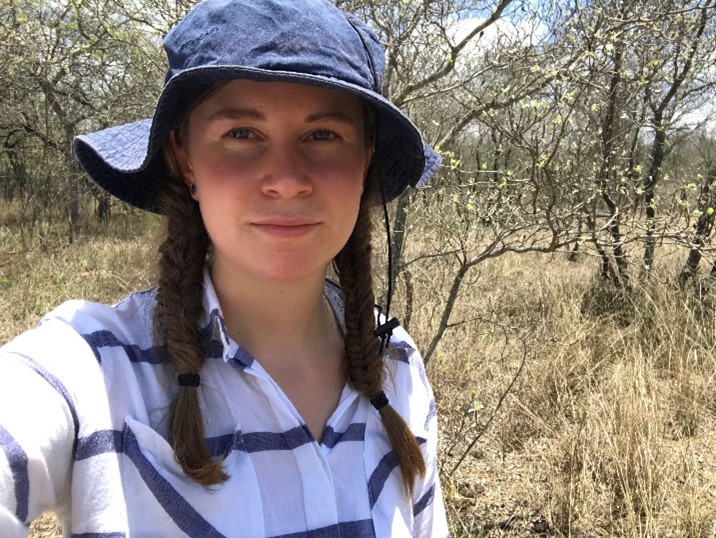
In this new post, Aya Permin, a new ecological researcher at the University of Copenhagen, Denmark, discusses her paper—High nitrogen-fixing rates associated with ground-covering mosses in a tropical mountain cloud forest will decrease drastically in a future climate—which has won the 2022 Haldane Prize for Early Career Researchers! About the paper Bryophytes (mosses, hornworts, and liverworts) are known to host nitrogen (N2)-fixing bacteria. These bacteria … Continue reading Aya Permin: Bryophyte-associated nitrogen fixation in a tropical mountain cloud forest—rates and responses to climate change
Alice Walker: Indirect control of decomposition by an invertebrate predator

In this new post, Alice Walker, a new ecological researcher at the School of Environmental Sciences, University of Liverpool, UK, discusses her paper: Indirect control of decomposition by an invertebrate predator—recently shortlisted for the 2022 Haldane Prize for Early Career Researchers. About the paper Most people have probably heard of vicious the “battles” that go on between ants and termites, thanks to the 1998 DreamWorks … Continue reading Alice Walker: Indirect control of decomposition by an invertebrate predator

Matthew Gilbert: Flowers of a South African succulent plant predict tomorrow’s weather, synchronizing flower opening with pollinator activity

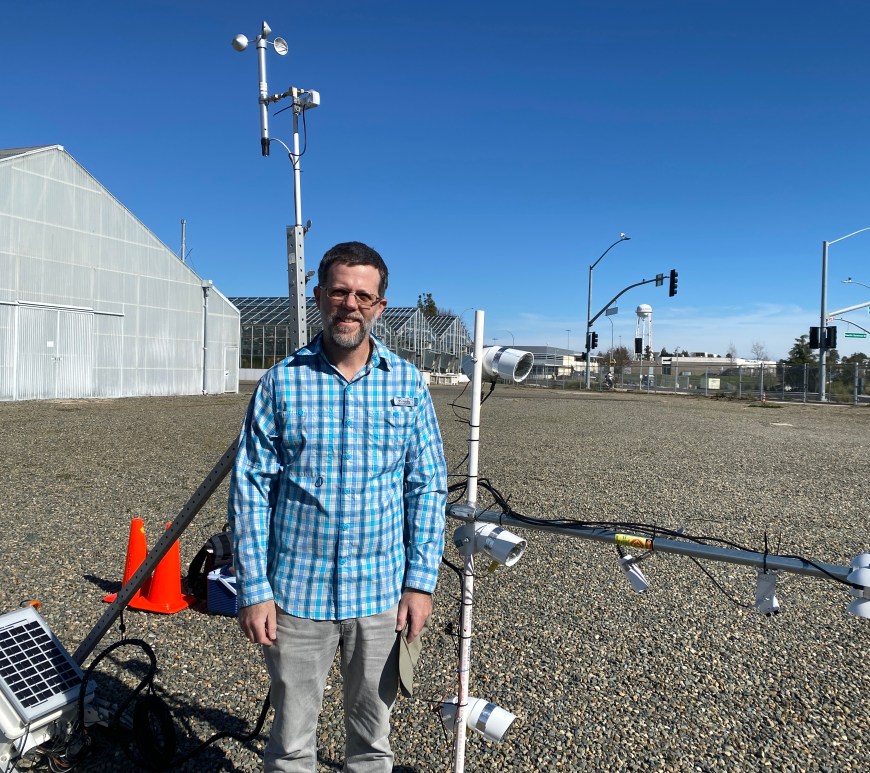
In this new post Matthew Gilbert—Associate Professor at University of California, Davis, CA, USA—presents his recently published paper “Flowers of a South African succulent plant predict tomorrow’s weather, synchronizing flower opening with pollinator activity“. He discusses the connection between phenology and weather, shows how inspiration can come from anywhere, and highlights the importance of observing nature to find interesting research questions. About the paper It’s … Continue reading Matthew Gilbert: Flowers of a South African succulent plant predict tomorrow’s weather, synchronizing flower opening with pollinator activity

Flower patterns improve foraging efficiency in bumblebees by guiding approach flight and landing: Podcast Transcript

In this podcast for Functional Ecology, Assistant Editor, Frank Harris, sits down with Anna Stöckl—a Group Leader at Konstanz University, Germany—to discuss her recently published paper ‘Flower patterns improve foraging efficiency in bumblebees by guiding approach flight and landing’. Anna’s paper shows that flower patterns reduced flower handling time by up to 30%, without a reduction in nectar discovery time. Instead, the patterns were involved … Continue reading Flower patterns improve foraging efficiency in bumblebees by guiding approach flight and landing: Podcast Transcript

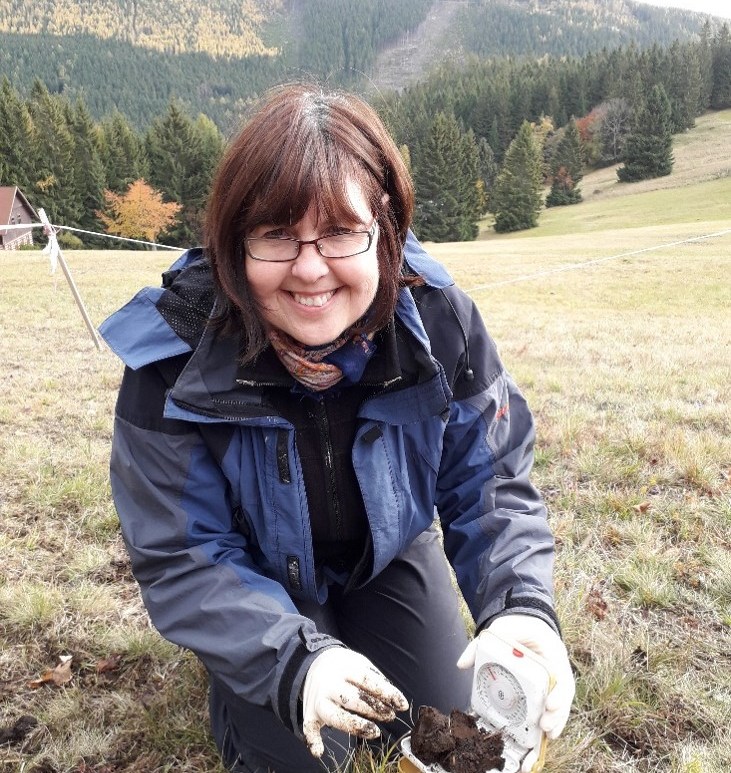
Hana Skálová: Cations make a difference: Soil nutrient patches and fine-scale root abundance of individual species in a mountain grassland

Alt: Stable nutrient patches in the field seem attractive for plant roots In this new post Hana Skálová, from the Institute of Botany in Průhonice (Czech Republic), presents her recently published article “Cations make a difference: Soil nutrient patches and fine-scale root abundance of individual species in a mountain grassland.” She discusses the importance of overlooked nutrients on plant roots, highlights how new technology enables … Continue reading Hana Skálová: Cations make a difference: Soil nutrient patches and fine-scale root abundance of individual species in a mountain grassland

Clea van de Ven: Three travelers discover how plants move during European Survey

In this new post, Clea van de Ven—a PhD candidate at the Royal Netherlands Institute for Sea Research—presents her recently published article ‘Establishing cordgrass plants cluster their shoots to avoid ecosystem engineering’. She presents her experience conducting ecological research in European shores, encourages us to dig into salt marshes, and shares the joy behind coincidences in life. On March 1st, 2019, I first entered the … Continue reading Clea van de Ven: Three travelers discover how plants move during European Survey

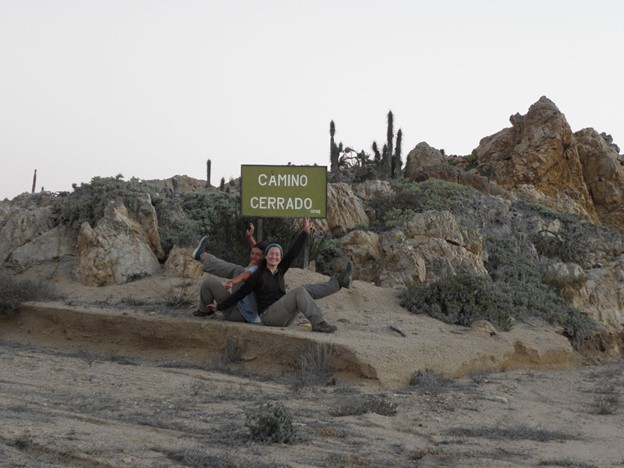
Liesbeth van den Brink & Rafaella Canessa: Las comunidades microbianas prefieren alimentos de alta calidad, no necesariamente comida local

En nuestro último post, las amigas y post-docs Liesbeth van den Brink y Rafaella Canessa de la University of Tübingen presentan su trabajo ‘No home-field advantage in litter decomposition from the desert to temperate forest’. En él discuten la importancia de las características de la hojarasca y su descomposición, presentan su ‘experiencia’ con roedores y comparten el placer de trabajar con tus amigos. An English … Continue reading Liesbeth van den Brink & Rafaella Canessa: Las comunidades microbianas prefieren alimentos de alta calidad, no necesariamente comida local

Liesbeth van den Brink & Rafaella Canessa: Microbial communities prefer high quality food, not specifically the food available “at home”

In this new post, post-doctoral friends Liesbeth van den Brink and Rafaella Canessa from the University of Tübingen, Germany, present their recently published paper “No home-field advantage in litter decomposition from the desert to temperate forest.” They discuss the importance of litter characteristics for decomposition, share their experiences with rodents, and celebrate the joy of working with friends. Una versión en Español de esta publicación … Continue reading Liesbeth van den Brink & Rafaella Canessa: Microbial communities prefer high quality food, not specifically the food available “at home”

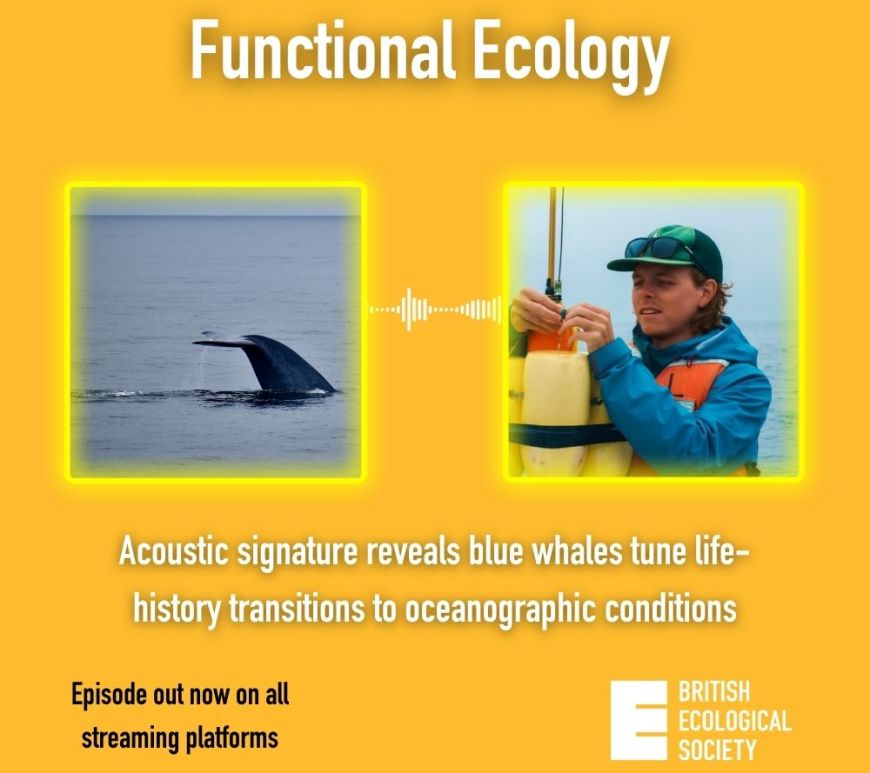
Acoustic signature reveals blue whales tune life history transitions to oceanographic conditions: Podcast Transcript

In this podcast for Functional Ecology, Assistant Editor, Frank Harris, sits down with William K. Oestreich—a postdoctoral fellow at Monterey Bay Aquarium Research Institute, USA—to discuss his recently published paper ‘Acoustic signature reveals blue whales tune life history transitions to oceanographic conditions’. Will’s paper suggests that blue whales use flexible cues, perhaps including individual sensing of food availability and social information from other individuals (blue … Continue reading Acoustic signature reveals blue whales tune life history transitions to oceanographic conditions: Podcast Transcript

Matthew Krna: Decomposition rates of leaf litter are temperature-independent

In this new post, Matt Krna—then a PhD student at Massey University, New Zealand—discusses his recently published paper in Functional Ecology: Temperature dependency of litter decomposition is not demonstrated under reciprocal transplantation of tussock leaves along an altitudinal gradient. This research follows on from his publication on clarifying carbon sequestration (Krna and Rapson, 2013). In his study of decomposition across a 700 m altitudinal gradient … Continue reading Matthew Krna: Decomposition rates of leaf litter are temperature-independent