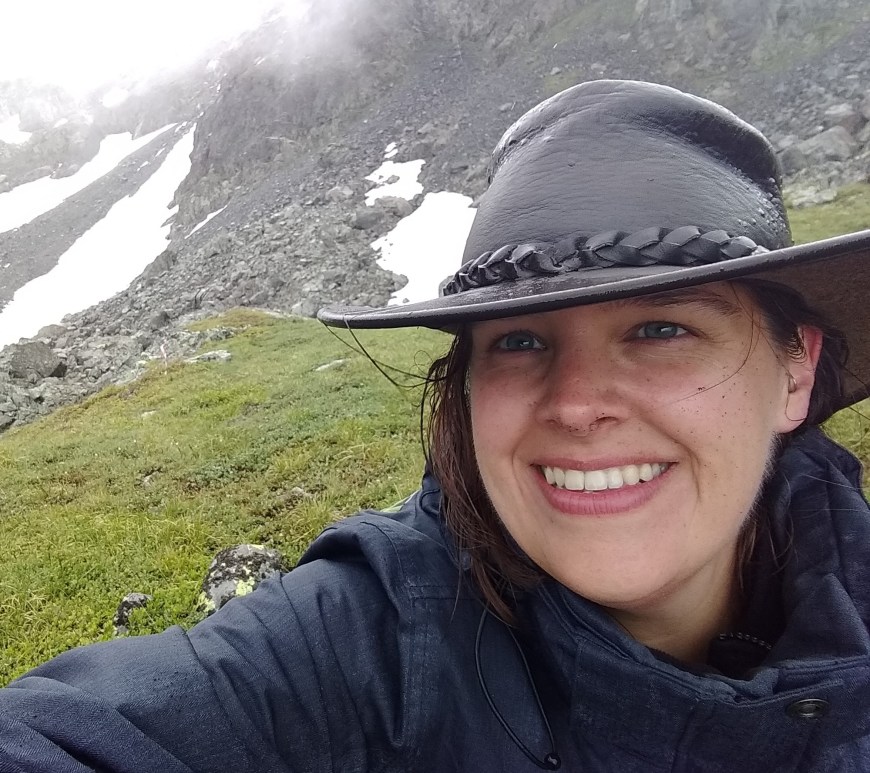
Selfie of Dr Adam Frew

Meet the editors: Adam Frew

Adam is an ecologist interested in plant-microbe and plant-insect interactions. His research investigates plant defences against herbivores, the ecology of arbuscular mycorrhizal fungi, and everything in-between. He usually employs experimental approaches in controlled environment (glasshouse/growth chamber) and field studies to tease apart the functional ecology of the interactions between mycorrhizal fungi, plants, and herbivores. He recently took up an ongoing position at the University of … Continue reading Meet the editors: Adam Frew

Jitka Klimesova sorting biomass in field

Jitka Klimesova: why we should all care more about belowground plant organs

Jitka Klimesova serves as Senior Scientist at the Institute of Botany of the Czech Academy of Sciences in Třeboň and as Professor at Charles University in Prague. Her main interest is in functional morphology of clonal and regenerative organs of herbs. She is the main author of the only existing database of clonal and bud bank traits for an entire flora (CLO-PLA; Czech Republic), organizes … Continue reading Jitka Klimesova: why we should all care more about belowground plant organs

Sandra Varga setting up a field experiment to exclude pollinators in Lincoln, UK.

Meet the editors: Sandra Varga

Sandra is an evolutionary ecologist deeply interested in understanding how plants interact with their environment, linking aboveground and belowground processes. Specifically, she explores the relationships between plants, mycorrhizal fungi, pollinators and herbivores. She is particularly interested in the evolution and maintenance of sexually dimorphic plant breeding systems, and how these systems and their associates are impacted by climate change. She combines observational approaches with manipulative … Continue reading Meet the editors: Sandra Varga

Louise S. Nørgaard

Louise S. Nørgaard: Energetics, population density and pathogen performance

Louise S. Nørgaard is currently working as a Research Fellow at the centre of Geometric Biology at Monash University, Melbourne. In this Insight, she talks about her recent publication in Functional Ecology, ‘Energetic scaling across different host densities and its consequences for pathogen proliferation’. About the paper What’s your paper about? Using the freshwater Daphnia magna and its gram-positive bacteria Pasteuria ramosa, we explore how … Continue reading Louise S. Nørgaard: Energetics, population density and pathogen performance

Author Lewis Halsey, with his 4-month old daughter, Charlotte. Photo by: Lewis Halsey

No quantification without calibration – estimating energy expenditure

Prof. Lewis Halsey, Environmental Physiologist in the Life Sciences Department at the University of Roehampton, discusses with us his recently accepted article, “Proxy problems: why a calibration is essential for interpreting quantified changes in energy expenditure from biologging data”, describes his research interests, and provides advice to fellow ecologists. About the Paper Every time an animal does anything, from moving around to reproducing to fighting … Continue reading No quantification without calibration – estimating energy expenditure

Monique Weemstra

Monique Weemstra: how do trees modify their roots to adapt to their location?

We welcome 2021 with a new post by Monique Weemstra, a postdoc at the University of Michigan. Here she talks about her latest research looking at how trees can modulate their root traits to account for environmental gradients and the importance of working with people enjoying ecology as much as you do. About the paper This study is a part of the ECOPICS project: a … Continue reading Monique Weemstra: how do trees modify their roots to adapt to their location?

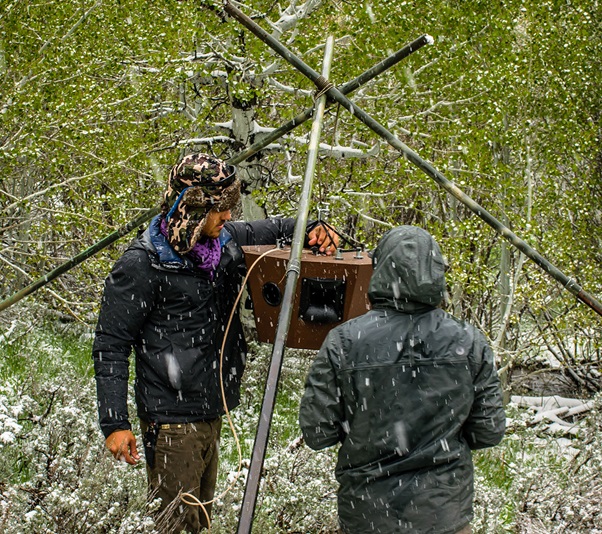
Lead author (left) setting up a speaker tripod for whitewater river noise playback.

Dylan Gomes: How the acoustic environment shapes spider abundance and behaviour

Dylan Gomes, a Ph.D. candidate at Boise State University, explains to us how the sounds of water affect spider abundance and behaviour in the recently accepted article, “Phantom river noise alters orb-weaving spider abundance, web size, and prey capture”, and discusses the need for more acoustic research in the field of ecology. What’s your paper about? Our paper highlights the importance of the natural acoustic … Continue reading Dylan Gomes: How the acoustic environment shapes spider abundance and behaviour

Festival of Ecology – Functional Ecology On Demand Playlist

Attending Festival of Ecology from a different timezone? Have a busy week? Never fear! There are hundreds of on demand talks, posters and activities you can get involved with. Here’s our pick from our own talented team of editor. Put the kettle on and tune in when you’re ready. Talks Effects of temperature on mating behaviour and mating success: a meta-analysis – Natalie Pilakouta Immediate … Continue reading Festival of Ecology – Functional Ecology On Demand Playlist

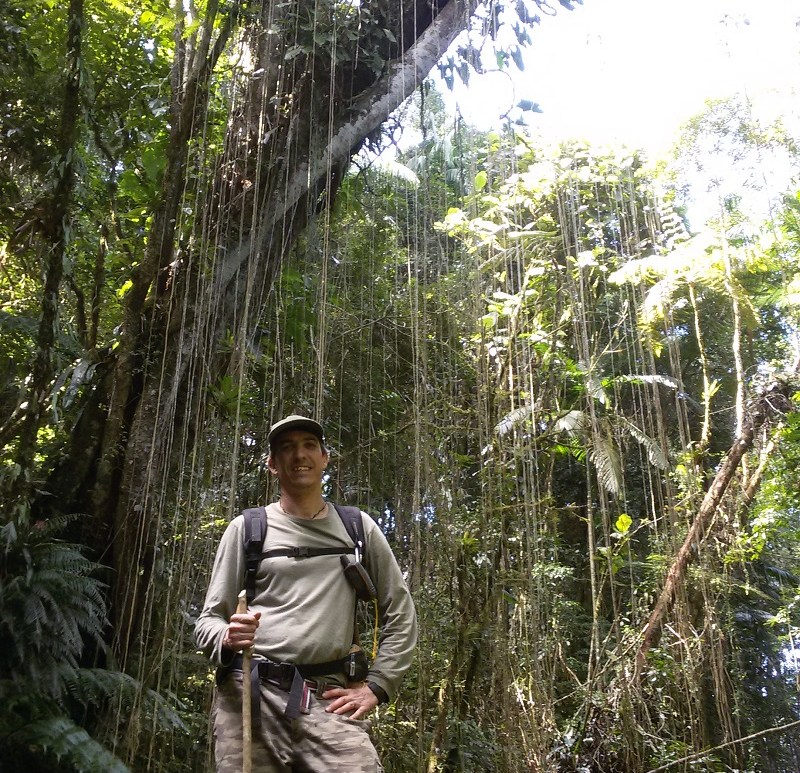
Nacho Villar in the Brazilian Atlantic Forest

Nacho Villar: the challenges of experimentally resolving the functional roles of large tropical forest herbivores

Nacho Villar, a post-doc at the Netherlands Institute of ecology, remembers the good times he had at Brazil, the challenges of running an animal exclusion experiment in the Brazilian Atlantic forest and how persistence, hard work and a little of cachaza are the key for a successful research. Frugivory underpins the nitrogen cycle. That’s what our latest work published at Functional Ecology shows. A game-changer for tropical … Continue reading Nacho Villar: the challenges of experimentally resolving the functional roles of large tropical forest herbivores

Michel at the WisAsp common garden

Michael Eisenring: Within-crown heterogeneity can affect herbivore performance in tree canopies

Dr. Michael Eisenring presents his work at University of Wisconsin titled “Spatial, genetic and biotic factors shape within‐crown leaf trait variation and herbivore performance in a foundation tree species”. He discusses the importance of sub-individual trait variation and how overcoming his fear to heights was worth it. 

Continue reading “Michael Eisenring: Within-crown heterogeneity can affect herbivore performance in tree canopies”