Author: British Ecological Society

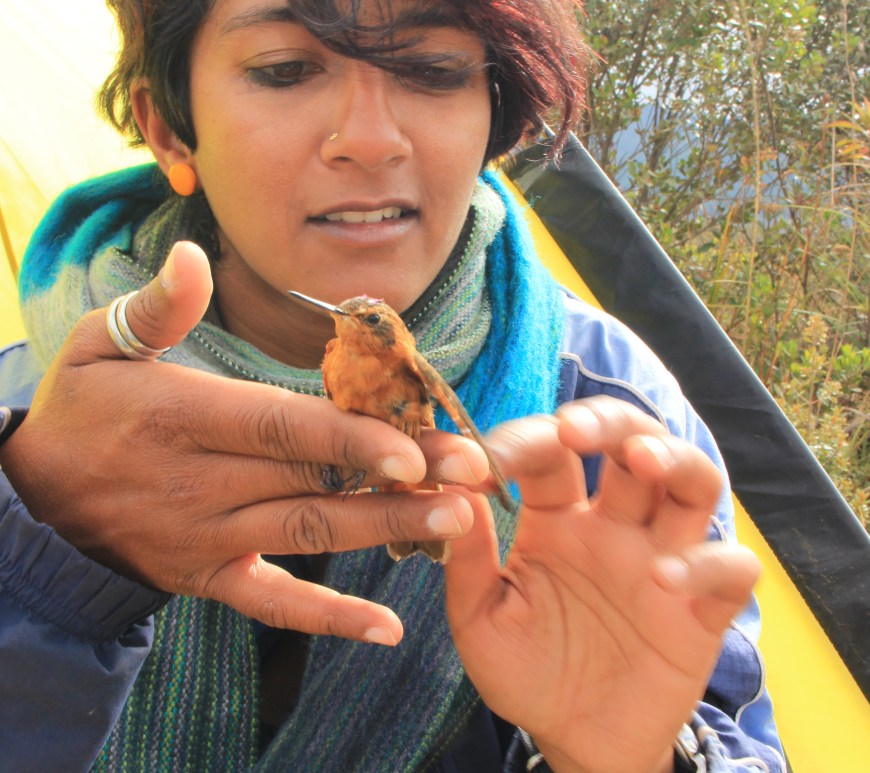
Anusha Shankar: Modelling energy budgets of hummingbirds
Dr. Anusha Shankar is a National Geographic Explorer and Young Leader, a Lewis and Clark Field Scholar, and a Postdoctoral Fellow at the University of Alaska at Fairbanks. In this insight, Dr. Shankar discusses her paper “Hummingbirds budget energy flexibly in response to changing resources”, how this work may be used for other species, and gives advice to fellow scientists.
Continue reading “Anusha Shankar: Modelling energy budgets of hummingbirds”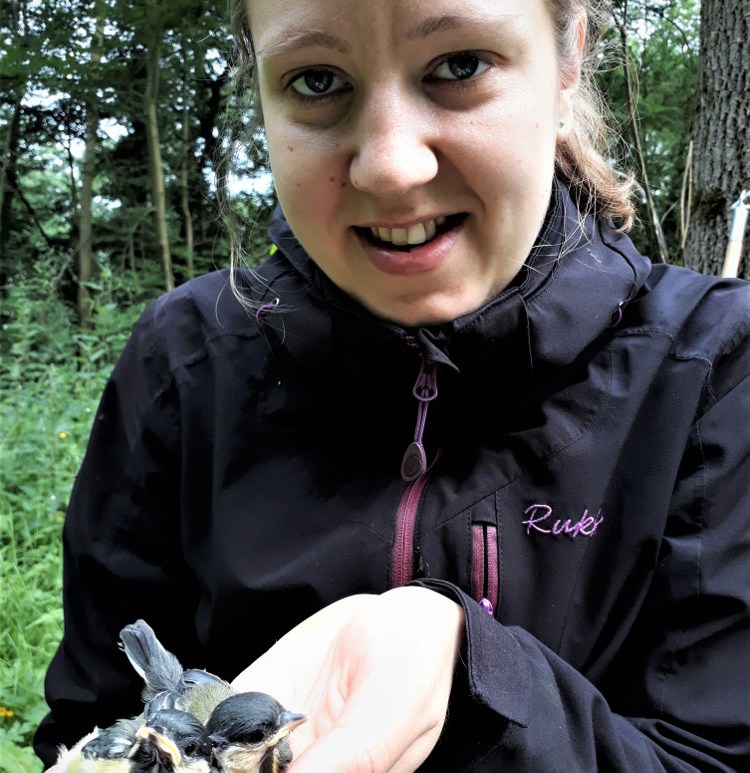
Liisa Hämäläinen: A bad taste in the mouth – worth watching others?
Liisa Hämäläinen, a Ph.D. candidate at the University of Cambridge, discusses how predators’ previous experience with toxins influences social information use in this insight.
Continue reading “Liisa Hämäläinen: A bad taste in the mouth – worth watching others?”Marie-Caroline Prima: Empirically testing the robustness of a spatial network following habitat loss and fragmentation

In this insight, Dr. Marie-Caroline Prima discusses the paper, “A landscape experiment of spatial network robustness and space-use reorganisation following habitat fragmentation”, possible new research questions, and her involvement in ecology.

Stefano Mammola: Revisiting Janzen’s hypothesis using cave-dwelling spiders
In this insight, Dr. Stefano Mammola discusses his paper “Extending Janzen’s hypothesis to temperate regions: a test using subterranean ecosystems” as well his experience as a subterranean ecologist. What’s your paper about? This paper is about testing the underlying assumption of Janzen’s hypothesis in caves. Published in 1967 under the evocative title “Why Mountain Passes are Higher in the Tropics”, Janzen’s hypothesis is an important … Continue reading Stefano Mammola: Revisiting Janzen’s hypothesis using cave-dwelling spiders
Julie Marie van der Hoop: foraging amongst old data with the whales
Julie Marie van der Hoop has just finished up a Marie Sklodowska-Curie Postdoctoral Research Fellowship with the Marine Bioacoustics Lab at Aarhus University. In this Insight, she talks about her work on Foraging rates of ram-filtering North Atlantic right whales. In this paper, the authors used multi-sensor bio-logging tags to ask the questions: How much prey-laden water is filtered by right whales over the course … Continue reading Julie Marie van der Hoop: foraging amongst old data with the whales
Brian Gerber: Sage grouse and site-fidelity: moving beyond the win-stay:lose-switch rule.
Dr. Brian D. Gerber is an assistant professor at the University of Rhode Island in the department of Natural Resources Science (Lab Website, Google Scholar, ResearchGate). He focuses on understanding behavioral, population, and community ecology to conserve and manage wild animals. In this insight, Dr. Gerber discusses the background of the paper, “Extreme site fidelity as an optimal strategy in an unpredictable and homogeneous environment” … Continue reading Brian Gerber: Sage grouse and site-fidelity: moving beyond the win-stay:lose-switch rule.
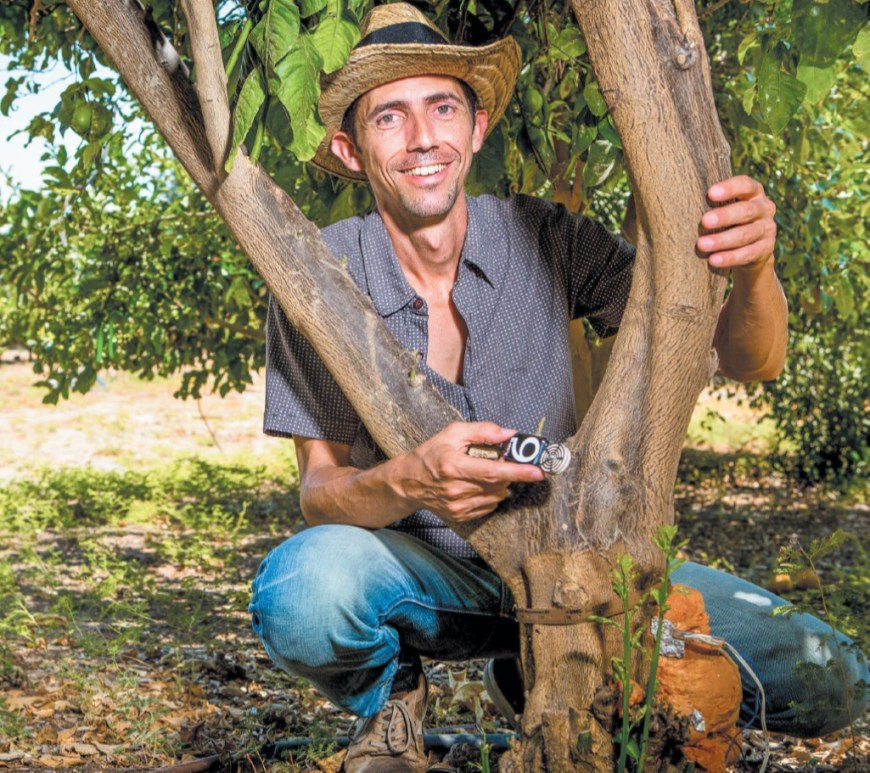
Tamir Klein: broadleafs, conifers and a high-CO2 world
In this Insight, Dr. Tamir Klein of Weizmann Institute of Science, Israel, talks about this latest paper Stomatal sensitivity to CO2 diverges between angiosperm and gymnosperm tree species.
Continue reading “Tamir Klein: broadleafs, conifers and a high-CO2 world”
Micah Scholer: birds, BMR and survival

In our latest Insight, Micah Scholer, a PhD student in Zoology at the University of British Columbia Biodiversity Research Centre, talks about his new paper, Survival is negatively related to basal metabolic rate in tropical Andean birds and his path into ecology.
Continue reading “Micah Scholer: birds, BMR and survival”
Manuela Abelho: fallen leaves and feeding streams

The journey is as important as the destination: autumn-leaves as the main food source for stream communities
In this Insight, Manuela Abelho discusses her recent paper, Litter movement pathways across terrestrial–aquatic ecosystem boundaries affect litter colonization and decomposition in streams.
Continue reading “Manuela Abelho: fallen leaves and feeding streams” Functional Ecologists