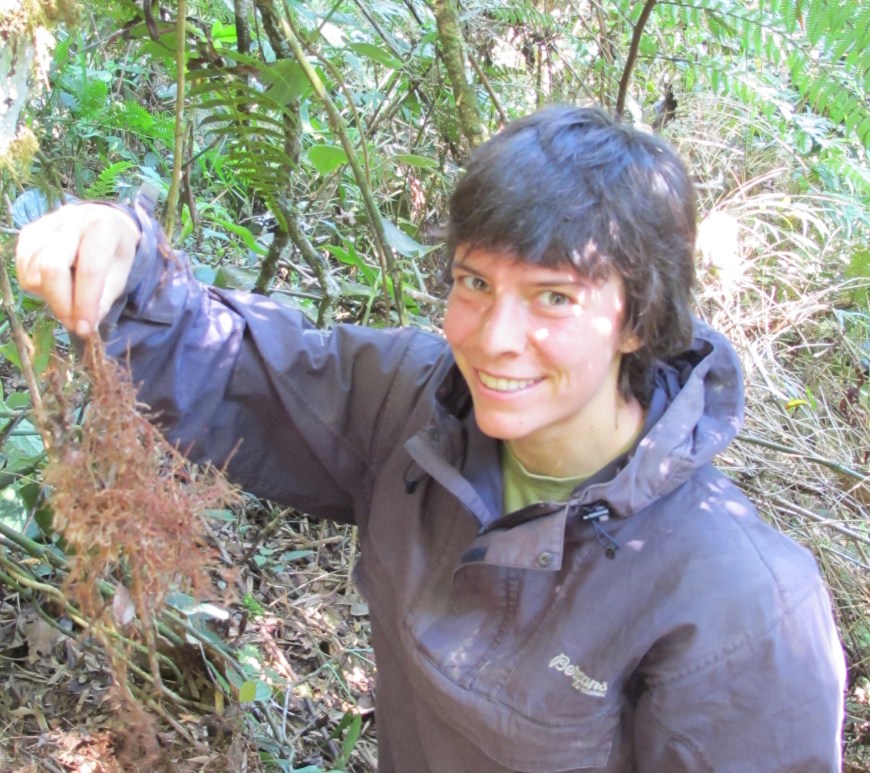
Lu Wang: Divergent microbial phosphorous acquisition strategies between active layer and permafrost deposits on the Tibetan Plateau

In this new post, Lu Wang, a Ph.D. student from the Institute of Botany, Chinese Academy of Sciences, China, discusses her recently published paper, “Divergent microbial phosphorous acquisition strategies between active layer and permafrost deposits on the Tibetan Plateau”. She delves into the research gap regarding phosphorus cycle in permafrost soils, highlights the challenges associated with measuring phosphorus acquisition strategies and shares her fascination for … Continue reading Lu Wang: Divergent microbial phosphorous acquisition strategies between active layer and permafrost deposits on the Tibetan Plateau

Els van de Zande: In the laboratory, greenhouse and field; how insects skins belowground can enhance the attraction of natural enemies of aboveground pest insects

Els van de Zande – a post-doc at Wageningen University, the Netherlands – presents her work ‘Enhanced parasitisation of caterpillars and aphids on field-grown Brassica oleracea plants upon soil amendment with insect exuviae’. She discusses how belowground changes can affect aboveground tri-trophic interactions, highlights a silver lining of the Covid-19 lockdowns and makes the case for investing time in volunteer work. About the paper Our … Continue reading Els van de Zande: In the laboratory, greenhouse and field; how insects skins belowground can enhance the attraction of natural enemies of aboveground pest insects

Kaz Uyehara on trade-offs during competition: Can plants have their cake and eat it too?

In this new post Kaz Uyehara, postdoc researcher at UC Davies, presents his work ‘Neighbour-detection causes shifts in allocation across multiple organs to prepare plants for light competition’. He explains how plants need to take critical decisions, shares his expertise about setting experiments and shows how it is possible to combine multiple passions, and even make a living out of it! About the paper Plants … Continue reading Kaz Uyehara on trade-offs during competition: Can plants have their cake and eat it too?

Kerstin Pierick: Las estrategias aéreas y subterráneas de las especies arbóreas montanas tropicales están coordinadas e impulsadas por la disponibilidad de nitrógeno a pequeña escala 

En nuestro último post, la postdoc Kerstin Pierick de la Universidad de Göttingen presenta el último capítulo de su tesis doctoral ‘Las estrategias aéreas y subterráneas de las especies arbóreas montanas tropicales están coordinadas e impulsadas por la disponibilidad de nitrógeno a pequeña escala’. Kerstin presenta su impresionante sistema de estudio, discute la conexión entre ambiente y rasgos, y nos recuerda la imporatncia de cambiar … Continue reading Kerstin Pierick: Las estrategias aéreas y subterráneas de las especies arbóreas montanas tropicales están coordinadas e impulsadas por la disponibilidad de nitrógeno a pequeña escala 

Kerstin Pierick: Above- and belowground strategies of tropical montane tree species are coordinated and driven by small-scale nitrogen availability 

In our last post Kerstin Pierick, postdoc at the University of Göttingen, discusses her last PhD thesis chapter ‘Above- and belowground strategies of tropical montane tree species are coordinated and driven by small-scale nitrogen availability’. She presents her astonishing study system, discusses the connection between environment and traits and remembers the importance of changing the point of view to understand nature.  A Spanish translation of … Continue reading Kerstin Pierick: Above- and belowground strategies of tropical montane tree species are coordinated and driven by small-scale nitrogen availability 

Graydon Gillies: Understanding how high temperatures influence resource acquisition and competitive ability

In our latest post Graydon Gilles, MSc student at Queen’s University, presents his work ‘Temperature-dependence and genetic variation in resource acquisition strategies in a model freshwater plant’. He explains the mechanisms behind competition, shows the challenges behind building a lab in your apartment and shares his passion for outdoor ecology.    About the paper  As temperatures increase because of anthropogenic climate change, organisms are going to … Continue reading Graydon Gillies: Understanding how high temperatures influence resource acquisition and competitive ability

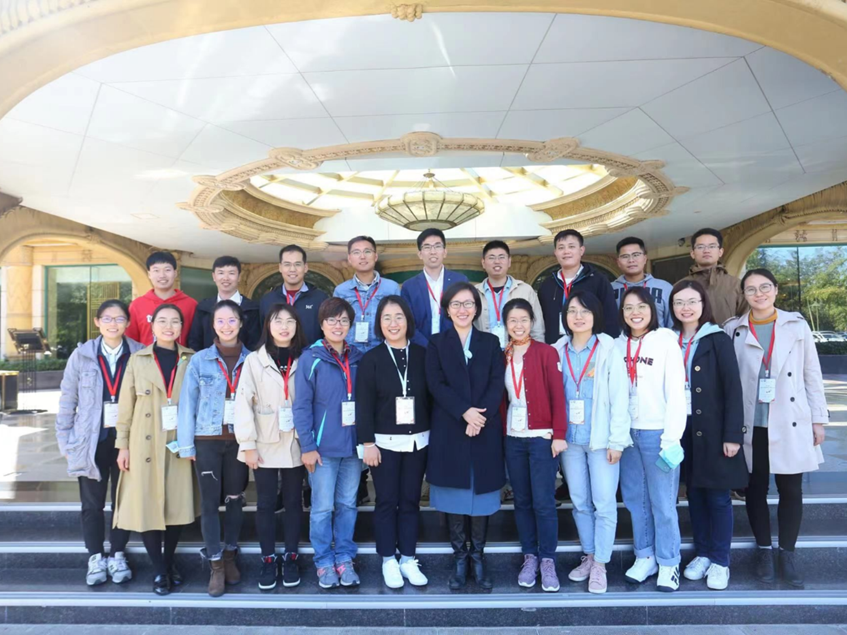
冯晓娟:POM和MAOM间微生物CUE的差异并不一致 (Chinese Translation)

在这篇博文中,来自中国科学院植物研究所的冯晓娟研究员介绍了她的研究团队最近发表的工作——“微生物碳利用效率在颗粒态有机质和矿物质结合态有机质之间是否存在差异?”在这项工作中,她们比较了颗粒态有机质(POM)和矿物质结合态有机质(MAOM)中的微生物碳利用效率(CUE)。通常,学术界认为POM和MAOM是具有不同的有机质组成和营养物可用性的两种土壤功能库。 关于这项研究 土壤异养微生物作为土壤有机碳(SOC)的分解者和贡献者,对SOC的转化和长期保存起着核心作用。微生物CUE是表征微生物有机碳转化效率的关键参数,在土壤碳模型中广泛应用于描述微生物转化过程。如上所述, 当前学术界普遍认为POM和MAOM是两种具有不同组成、形成途径和环境持久性的SOC功能库。一些新一代模型(如Millennial模型)假设POM和MAOM具有相同的微生物CUE值。然而,最近的一些研究推测认为,由于MAOM中更高的养分含量和较高的底物质量,即MAOM中碳氮比较低,MAOM中的微生物CUE可能高于POM。然而,目前尚缺乏对比POM与MAOM微生物CUE的实证研究,这限制了土壤和生态科学家从微生物生理学属性的视角理解不同土壤功能碳库形成过程和效率。 关于这篇论文 本项研究的关键在于分离POM和MAOM。她们尝试了很多种方法,最终选择使用Milli-Q水而非化学分散剂或密度剂(如偏钨酸钠),以减少残留化学物质对土壤微生物可能造成的干扰。尽管这种方法可能无法完全分离POM和MAOM,但她们观察到有机物质组成、微生物群落组成和磷的可利用性在POM和MAOM之间存在显著差异,表明所采用的方法至少在一定程度上区分了POM和MAOM。研究者进一步选取了25个具有不同土壤属性的天然森林和草地,从中分离出POM和MAOM,并使用18O标记水进行培养实验,比较它们的微生物CUE。与预期相反,由于MAOM和POM间微生物氮的可利用性是相似的,微生物CUE在POM和MAOM之间并没有一致差异。然而,随着微生物磷限制在POM中相对增加,CUEPOM/CUEMAOM随之降低。这一结果预示着,在磷限制增强的情景下,不同土壤碳库的微生物CUE差异可能增强。由于两种土壤功能碳库之间微生物CUE的微小差异可能对土壤有机碳库的稳定性和转化带来深远影响,未来应对POM与MAOM中微生物CUE的潜在差异给予更多关注。 关于作者 出于对大自然的好奇和热爱,冯晓娟从小就迷恋各种昆虫和植物,同时也在心中种下了一颗从事生态学研究的种子。上大学之后她发现土壤中有着无穷的奥秘等待着她去探索,从那时起,她便开启了土壤生态学的研究。她于2013年入职中国科学院植物研究所,成为“碳循环与有机地球化学研究组”组长,目前担任植物研究所副所长。长期从事生物地球化学与全球变化研究,主要应用生物标志物、单体14C等分子水平的地球化学方法,聚焦于SOC在陆地-河流系统中的循环及其对全球变化的响应。她经常对自己的学生们说:“选择比努力更重要!” Continue reading 冯晓娟:POM和MAOM间微生物CUE的差异并不一致 (Chinese Translation)

Xiaojuan Feng: microbial Carbon use efficiency did not consistently differ between particulate and mineral-associated organic matter

In this new post, Professor Xiaojuan Feng from the Institute of Botany, Chinese Academy of Sciences presents her work ‘Does microbial carbon use efficiency differ between particulate and mineral-associated organic matter?’ She compares the microbial carbon use efficiency (CUE) in particulate organic matter (POM) and mineral-associated organic matter (MAOM), which represents different soil functional pools with varied organic matter composition and nutrient availability. A Chinese … Continue reading Xiaojuan Feng: microbial Carbon use efficiency did not consistently differ between particulate and mineral-associated organic matter

Valentin Graf: The importance of individual behavior for bird-mediated seed dispersal

In our latest post Valentin Graf, PhD student at the Senckenberg Biodiversity and Climate Research Centre in Frankfurt, presents his work ‘Individual behavior shapes patterns of bird-mediated seed dispersal’. He discusses the importance of moving from species to individual scale in ecology, shares how he overcame setbacks at the beginning of the research project, and shows how leaving the ground can help doing fieldwork.  About … Continue reading Valentin Graf: The importance of individual behavior for bird-mediated seed dispersal

Yongqiang Zhang: Functional diversity of neighbors mediates sap flow density and radial growth of focal trees, but in different ways between evergreen and deciduous broadleaved species

In this post, Yongqiang Zhang—a PhD student at Peking University—shares his recently published paper: “Functional diversity of neighbors mediates sap flow density and radial growth of focal trees, but in different ways between evergreen and deciduous broadleaved species”. He underscores the importance of this research in advancing forest management practices by regulating species composition in the neighborhood, which can reduce water consumption by trees while … Continue reading Yongqiang Zhang: Functional diversity of neighbors mediates sap flow density and radial growth of focal trees, but in different ways between evergreen and deciduous broadleaved species