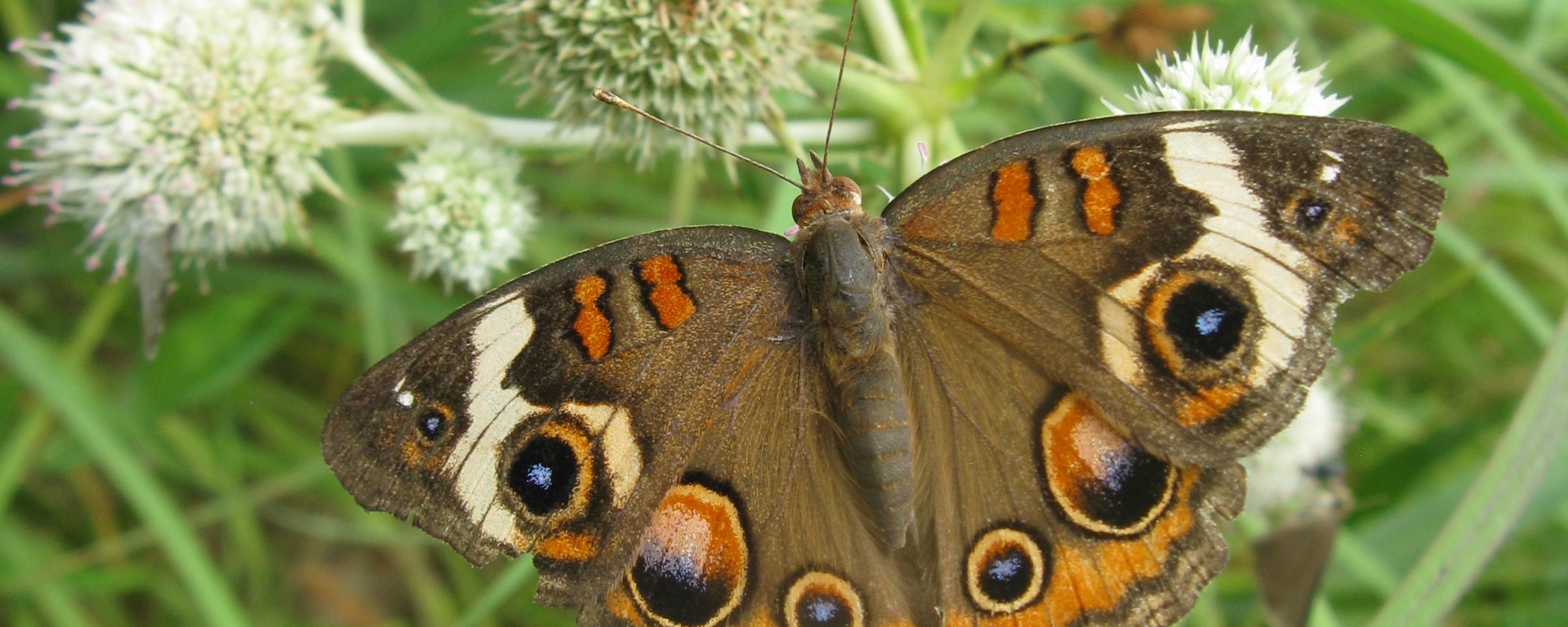
In this week’s blog post, we’re gearing up for a shift in seasons with author Grace Hirzel as we explore the behavioural changes in a temperate butterfly. Based on their paper: “Synchronous seasonal plasticity in colouration, behaviour, and visual gene expression in a wild butterfly population”, Grace shares with us how seasonal conditions impact behaviour and how animals perceive their environment. Through the use of RNA-Seq and qPCR, Grace explains the fascinating link between time of year and gene expression in the eye of the common buckeye (Junonia coenia). Grace reiterates that through a positive, collaborative network, a lot can be overcome!
About the paper
Summer and autumn (or “fall” in North America) each bring unique stressors that animals need to overcome. If an animal is seasonally plastic, it can exhibit different traits, whether they be behavioral, morphological, or physiological to better suit its seasonal environment. Some of these traits, like color and behavior, may be more obvious than changes to physiology, which are no less important and may explain other seasonal changes. Behavior may be especially impacted by changes to sensory systems (e.g. visual, olfactory, etc.) which control how animals perceive their environments.
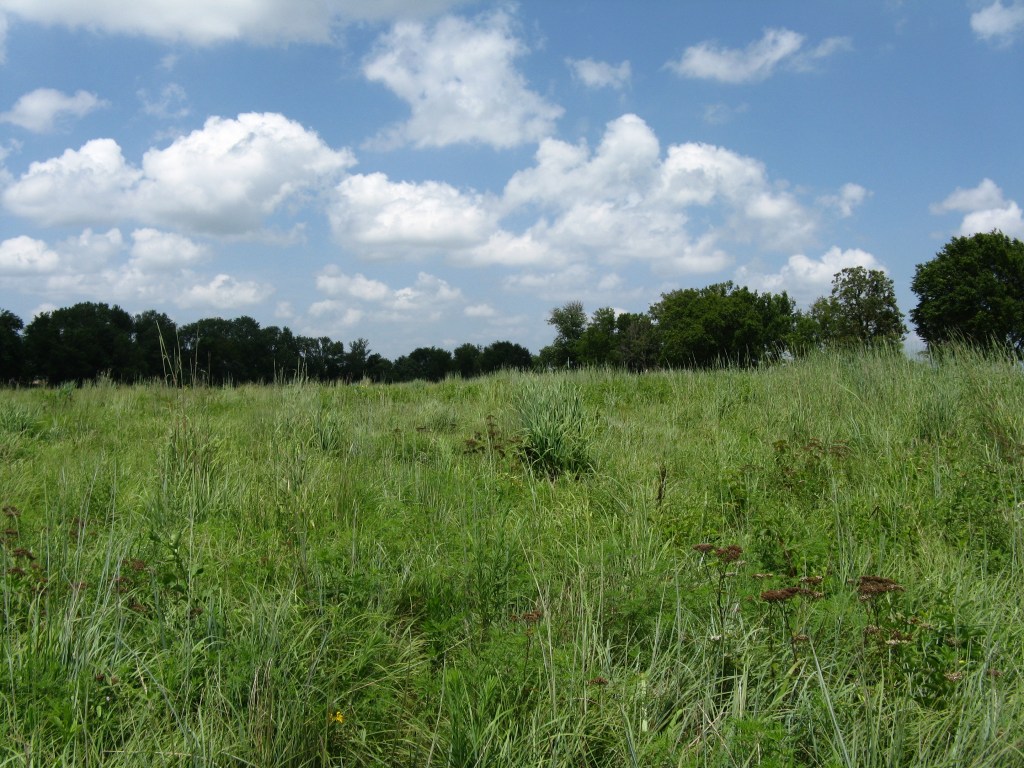
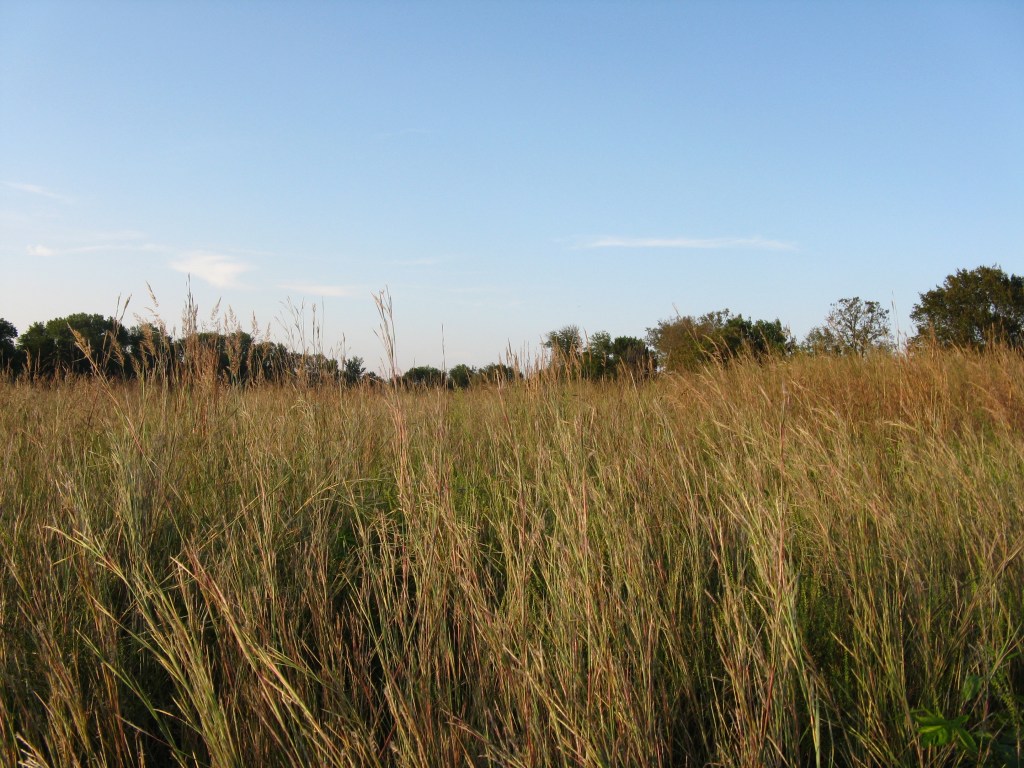
Chesney Prairie throughout the year: July (left) and October (right) at one of our point count locations. (Photo credits: Grace Hirzel)
Our paper examined seasonal changes in the common buckeye (Junonia coenia), a butterfly species already well studied for its seasonal wing coloration (i.e. light wings in summer and dark in fall). We studied wild populations to find if this seasonal change in wing colour is also accompanied by a seasonal change in behaviour and visual sensitivity to colour, since colour vision plays a major role in determining butterfly behaviour.
We found that at the same time J. coenia populations were exhibiting seasonal changes in coloration, they were also spending more of their time basking, a behavior where butterflies use solar radiation to raise their body temperature. The eye tissue of dark fall morph butterflies also differed in patterns of gene expression compared to lighter summer morph butterflies. We didn’t find a seasonal change in opsin genes, which are responsible for color sensitivity, but we did find seasonal and sexual expression of many other genes important for circadian rhythm and visual development.
We show that the traits that encompass a seasonal phenotype can be pervasive and non-obvious, affecting morphology, behavior, and the sensory systems that mediate behavior. We also illustrate that this type of comparative work is possible using wild populations in the noisy, unpredictable natural world, even when the cues that trigger these seasonal changes may be unknown.
About the research
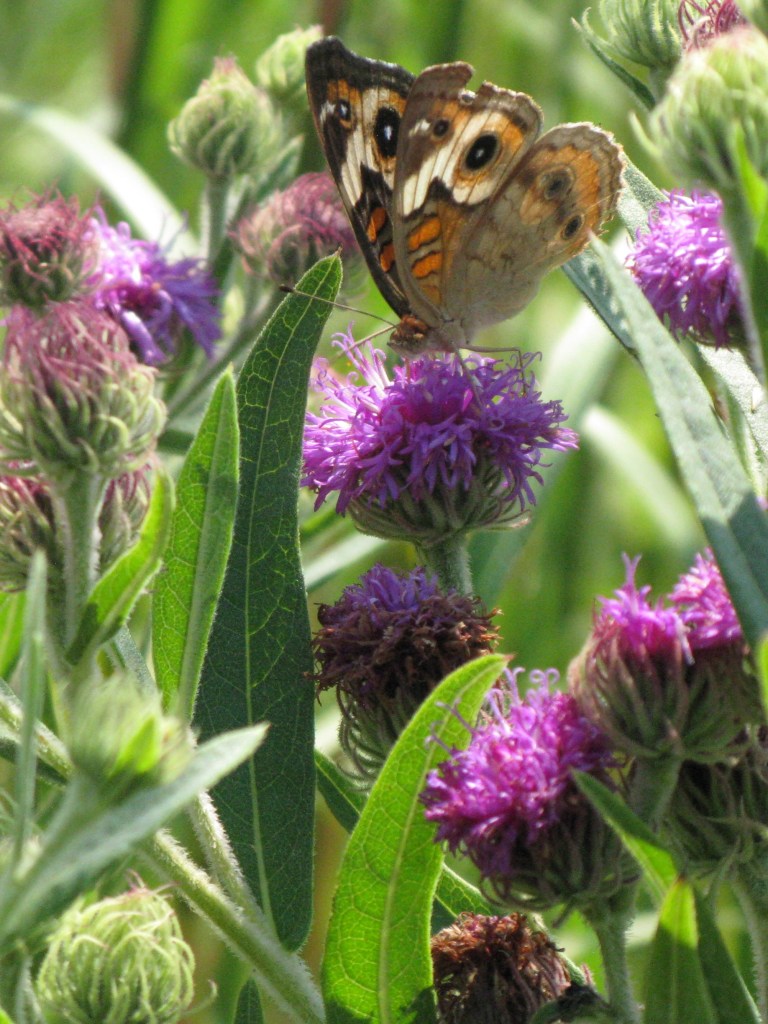
Data collection in the field occurred over the course of four years; during the summer and fall we visited prairie field sites in the central United States to collect butterflies for morphological and molecular data. We also observed butterfly behavior during point counts and focal watches at these sites. Working with wild populations always involves some luck, but fortunately our field sites were excellent habitat that supported high numbers of butterflies even in “bad years”.
In the lab, we examined wing colors of collected specimens, both qualitatively (by scoring) and quantitatively (with a spectrophotometer). We also dissected eye tissue from collected butterflies to run two types of molecular assays: RNA-Seq and qPCR. The RNA-Seq allowed us to uncover large patterns in gene expression in the eye. With qPCR we could investigate changes in expression of a few genes of interest that are important for behaviour, including the clock gene, Period, and three opsin genes that control colour sensitivity.
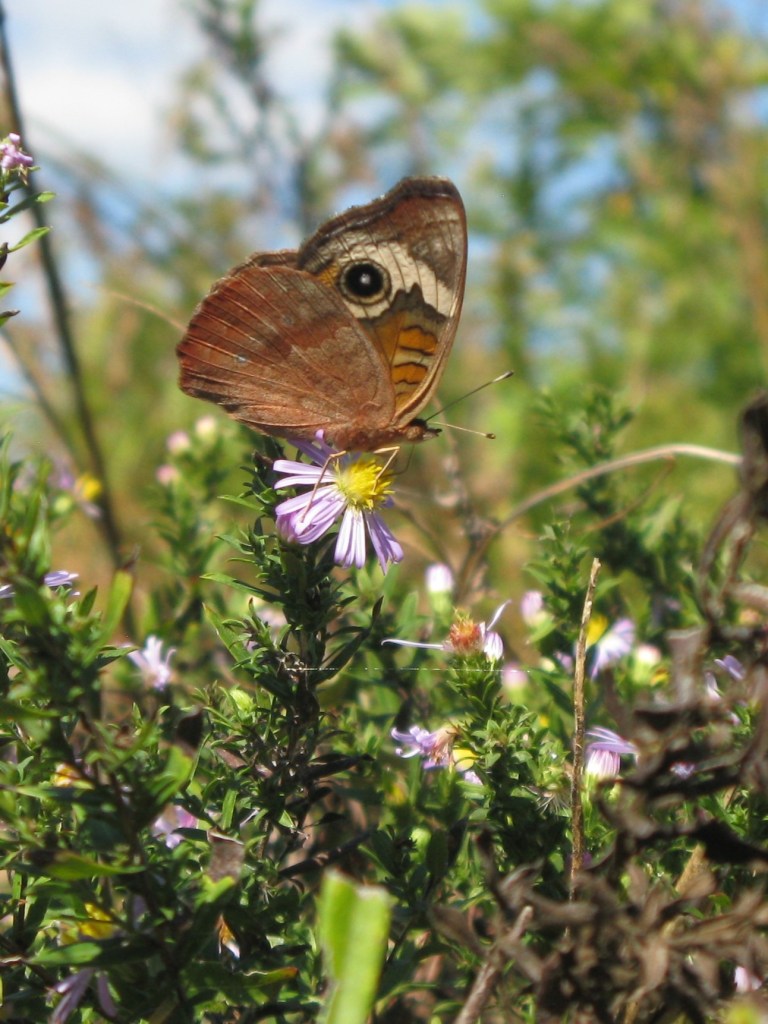
When I designed this project with my advisor Erica Westerman, I was convinced we were going to find seasonal changes in opsin gene expression and had only planned on running qPCR to compare gene expression. I’m very glad we added the RNA-Seq component at Bob Reed’s suggestion and collaborated with his lab. The RNA-Seq allowed us to identify the many other visual development genes that were seasonally expressed, which the qPCR on opsin genes didn’t. It also turned out that without the RNA-Seq it also would have been tricky to examine UV opsin gene expression with qPCR. After I tried and failed to find qPCR primers for the UVRH gene, my collaborator Noah Brady used the RNA-Seq data to make a consensus sequence for UVRh and I used that to make the primers. It turned out UVRH extended beyond the putative 3’ end freely available online for J. coenia! It struck me that there is a glut of information available in transcriptomic datasets like ours, but only a small subset actually ends up in the paper.
he qPCR provided some interesting data too; I was surprised by the sexual dimorphism we found in color vision after not finding it with the RNA-Seq analysis. Females had higher gene expression of the blue sensitive opsin gene compared to males. I would have expected males to have higher expression of these opsin genes, based on J. coenia’s mating strategy and because the females are more colorful than males.
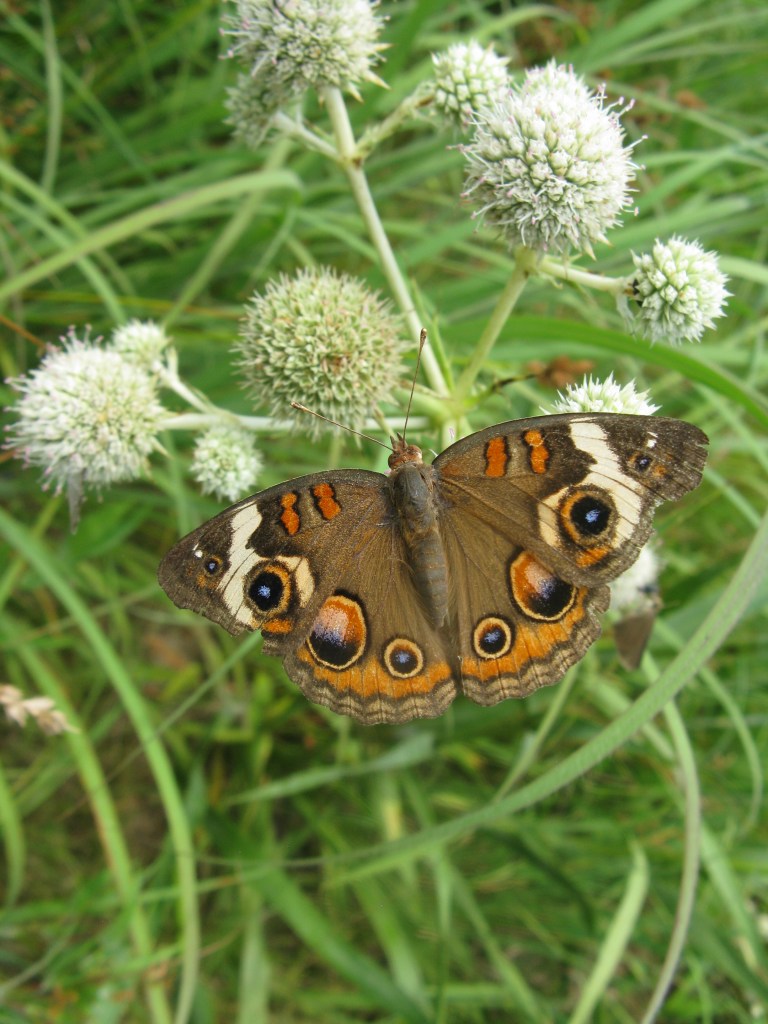
I think next steps for this research are answering some J. coenia specific questions, like examining how eye anatomy changes seasonally (which based on the RNA-Seq data it should!) and if there are adaptive reasons for females being ostensibly more sensitive to blue than males. More broadly, I think future research should examine the seasonal physiology of eyes and other sensory systems of more butterfly and insect species living in temperate environments. I’m curious if the seasonal patterns in eye tissue uncovered in our RNA-Seq analysis are a widely occurring adaptation to “fall conditions” found in many species or if they are only found in those species with obvious seasonal polyphenisms.
About the author
I had a great experience working as an undergraduate research assistant in an insect and landscape ecology lab. After that I knew I wanted a career in insect ecology research! Currently I’m a post-doctoral researcher at North Dakota State University in the central United States where I’m under the supervision of university and USDA-ARS scientists.
Right now, I’m working to document intra-specific variation in floral traits and figure out how this affects bee visitation, in both agricultural and natural settings. Some of my work is on commercial sunflower, which in this part of the world is mainly pollinated by solitary native bees. So little is known about these bees compared to other pollinating powerhouses like honey bees and bumble bees. I have so many questions about the many bee behaviors I get to witness in the field!
In my free time I have my own set of seasonal behaviors and like to garden and hike during the warmer months. When it starts to get snowy and cold, I head indoors to knit and read science fiction.
I’ve run into some of the unconscious biases against women still present in science, but fortunately most of these challenges have been buffered by being persistent and having supportive colleagues and mentors.

