
2025 HALDANE PRIZE SHORTLIST: Jiawei Zhang discusses the paper “Spatial distribution and driving factors of microbial necromass carbon in coastal wetlands of China“, which has been shortlisted for Functional Ecology’s 2025 Haldane Prize for Early Career Researchers.
About the Paper
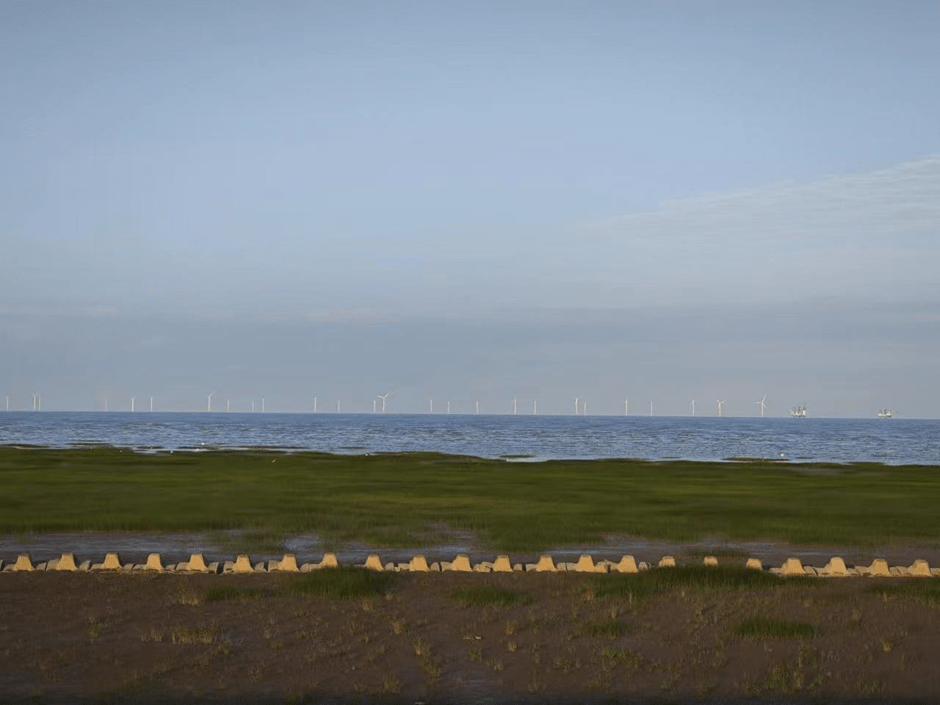
Our paper explores how microbial necromass carbon (MNC)—carbon derived from dead microorganisms—is distributed across China’s coastal wetlands and what drives its accumulation. Coastal wetlands are key blue carbon ecosystems, yet most research focuses on plants rather than microbes. We aimed to understand how climate, plant productivity and soil properties jointly regulate MNC across mangroves, salt marshes and mudflats, and how coastal wetlands compare with terrestrial ecosystems. Ultimately, we wanted to clarify the role of microbial processes in long-term coastal carbon storage.
We were surprised that although mangroves had much higher MNC concentrations, the contribution of MNC to total soil carbon did not differ significantly among wetland types. This suggests strong environmental constraints shared across coastal systems. A major challenge was conducting standardized sampling across more than 2,500 km of coastline, while accounting for highly dynamic tidal and sediment conditions. Integrating large-scale field data with cross-ecosystem literature comparisons was also methodologically demanding.
The next step is to better integrate microbial processes into blue carbon frameworks. This includes linking microbial necromass formation with microbial community traits, mineral protection mechanisms and carbon stability over depth and time. Experimental approaches that combine field observations with controlled manipulations—such as flooding, warming or nutrient enrichment—will be essential to predict how coastal soil carbon responds to climate change and sea-level rise.
Our findings suggest that coastal carbon management should look beyond vegetation alone. Microbial-derived carbon represents a distinct and persistent component of blue carbon, especially under anaerobic conditions. Incorporating microbial processes into carbon accounting could improve estimates of long-term carbon sequestration and reduce uncertainty in blue carbon offset schemes. This is particularly relevant for mangrove conservation, wetland restoration and climate mitigation policies.
About the author
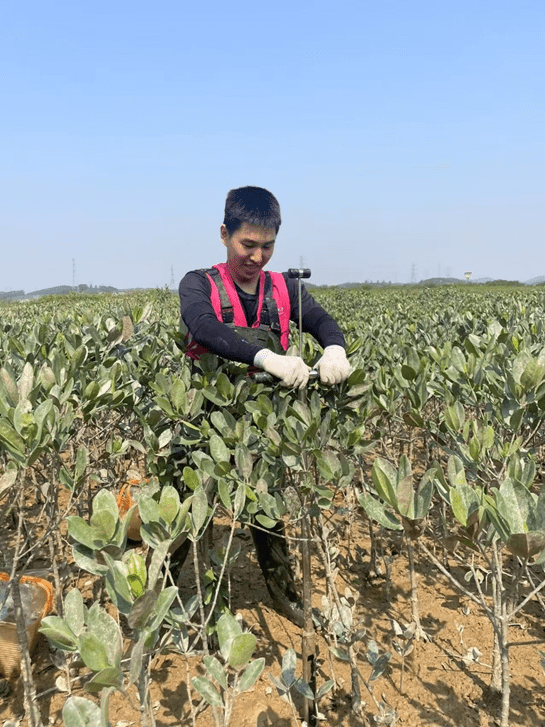
I grew up in Shanghai, a coastal city in China, and developed a strong fascination with the sea from an early age. During my studies, I had the opportunity to take part in two large-scale field campaigns along the Chinese coastline—one focused on sandy beaches, and the other on muddy tidal flats. I became interested in ecology during my studies, when I started to notice how invisible processes can shape large-scale environmental patterns. As I progressed in my training, I realised that microorganisms—despite being largely unseen—play a decisive role in ecosystem functioning and carbon cycling. This insight gradually drew me towards soil and sediment processes at the interface of biology, chemistry and climate science.
I am currently a PhD student working on coastal wetland ecology and biogeochemistry, with a particular focus on the relationship between the biodiversity and ecosystem functional. We are continuing this research by examining how microbial necromass interacts with iron-bound organic carbon and how these mechanisms respond to environmental gradients such as salinity, flooding and nutrient availability. We are also expanding comparisons across different coastal regions to improve the generality of our findings.
One piece of advice would you give to someone in my field: Try to look beyond disciplinary boundaries. Many important ecological processes—especially microbial ones—sit at the intersection of biology, chemistry and Earth system science. Combining field observations with conceptual thinking and cross-ecosystem perspectives can reveal patterns that are otherwise easy to miss.

 Functional Ecologists