Black History Month 2024: Dr Bashir Bolaji Tiamiyu

For Black History Month 2024, the British Ecological Society (BES) journals are celebrating the work of Black ecologists around the world and sharing their stories. In this blog, Dr Bashir Bolaji Tiamiyu shares his story and journey in academia. Name: Bashir Bolaji Tiamiyu Affiliation: Ecology Interests: How did you get into ecology?I grew up in Ilorin, an urban area that is the capital of Kwara … Continue reading Black History Month 2024: Dr Bashir Bolaji Tiamiyu

Simon Bahrndorff: Acclimation to moderate temperatures can have strong negative impacts on heat tolerance of arctic arthropods

In this new post, Simon Bahrndorff of Aalborg University in Denmark presents his work ‘Acclimation to moderate temperatures can have strong negative impacts on heat tolerance of arctic arthropods‘. Simon discusses his research on the effects of prolonged exposure to moderate temperatures on terrestrial Arctic ectotherms and shares his thoughts on the importance of uncovering challenges and solutions for a changing world. About the Paper … Continue reading Simon Bahrndorff: Acclimation to moderate temperatures can have strong negative impacts on heat tolerance of arctic arthropods

Noah Leith: Understanding how thermoregulation affects insect survival and reproduction in the face of climate change 

In this ‘Behind the Paper’ blog post, Noah Leith – a PhD candidate in the Fowler-Finn Lab at Saint Louis University – discusses his research article Thermoregulation enhances survival but not reproduction in a plant-feeding insect, which was recently published in Functional Ecology. Noah discusses the impacts of thermoregulation on treehopper survival and reproduction, the joys of temperature models, and how his interest in animal … Continue reading Noah Leith: Understanding how thermoregulation affects insect survival and reproduction in the face of climate change 

Myrsky Eero: The warming arctic, herbivore outbreaks and the importance of long-term field studies

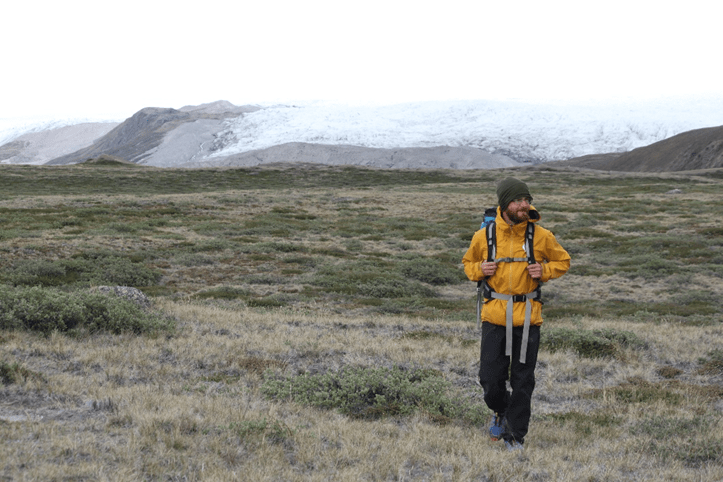
In our latest post, Myrsky Eero, a PhD student at the University of Helsinki, presents his work ‘Higher vascular plant abundance associated with decreased ecosystem respiration after 20 years of warming in the forest-tundra -ecotone’. He discusses the importance of long term research, presents the complex trade-offs happening in ecology and shares his passion for cold places. About the Paper The Arctic is warming as … Continue reading Myrsky Eero: The warming arctic, herbivore outbreaks and the importance of long-term field studies

Camila Madeiros: What are you doing in a place like this? Connecting plants’ climate preferences with functional traits

Camila Medeiros—a post-doc at University of California Los Angeles, USA—presents her work ‘Predicting plant species climate preferences on the basis of mechanistic traits’. She discusses the connection between traits and niches, shows how to do ecology with small budgets, and highlights the need to transfer scientific knowledge to general audiences. About the paper By using mechanistic traits, our paper improves the ability to predict plant … Continue reading Camila Madeiros: What are you doing in a place like this? Connecting plants’ climate preferences with functional traits

Gil Rilov: Invasive engineers—global drivers of ecological change

In this post, Prof. Gil Rilov—Senior Scientist at the National Institute of Oceanography, Israeli Limnological and Oceanographic Research (IOLR), as well as Associate Professor, at the University of Haifa, Israel—discusses his recently published review paper ‘Ecological impacts of invasive ecosystem engineers: A global perspective across terrestrial and aquatic systems’. Gil discusses the impacts, positive and negative, of alien invasions, his love of diving, and what … Continue reading Gil Rilov: Invasive engineers—global drivers of ecological change

Tesa Madsen-Hepp: Plant functional traits lend predictability to idiosyncratic range shifts

In this new post, Tesa Madsen-Hepp—PhD candidate at the University of California Riverside, USA—presents her latest research ‘Plant functional traits predict heterogeneous distributional shifts in response to climate change’. She highlights the high value of the Deep Canyon Transect, discusses the response of diverse dryland plant communities to long-term climate change, and shares the challenges in intense field campaigns. About the paper Our paper investigates … Continue reading Tesa Madsen-Hepp: Plant functional traits lend predictability to idiosyncratic range shifts

Jackson Drew: Aging in the Arctic—Insights from a study on woody shrubs

In this new post, Jackson Drew—a PhD candidate in Alaska—presents his work ‘Age Matters: older Alnus viridis ssp. fruticosa are more sensitive to summer temperatures in the Alaskan Arctic‘. Here he shows the importance of age for plant growth, discusses the importance of global change for vegetation, and tells us how Alaska is not as cold as it used to be. About the paper To … Continue reading Jackson Drew: Aging in the Arctic—Insights from a study on woody shrubs

Austin Allison: Ground squirrels hibernate to avoid predation, but not at the expense of reproductive opportunities

Austin Allison—a PhD student at Colorado State University and recent MS graduate from the University of Idaho—discusses his recently accepted paper: “Why hibernate? Tests of four hypotheses to explain intraspecific variation in hibernation phenology.” About the Paper Why do animals hibernate? I—like many people—assumed I knew the answer to that question. Animals obviously hibernate to avoid seasonally unsuitable environmental conditions such as freezing temperatures and … Continue reading Austin Allison: Ground squirrels hibernate to avoid predation, but not at the expense of reproductive opportunities

Georgia Hernández Corrales: Closely related tropical herbs have similar tolerance to high temperatures

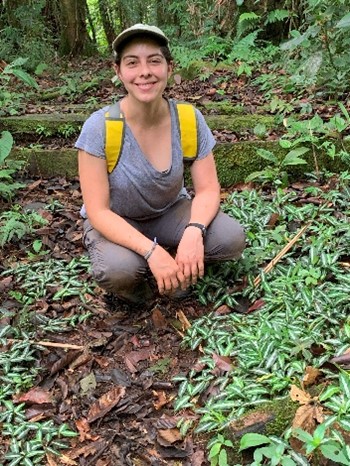
In our newest post Georgia Hernández Corrales—PhD candidate at University of Connecticut, USA—presents her work ‘Evolutionary history constrains heat tolerance of native and exotic tropical Zingiberales’. She discusses the importance of evolutionary history for plant physiology, shares the beauty of tropical forests, and highlights the importance of mentorship for a happy start in research. About the paper Lowland forests are one of the warmest ecosystems … Continue reading Georgia Hernández Corrales: Closely related tropical herbs have similar tolerance to high temperatures