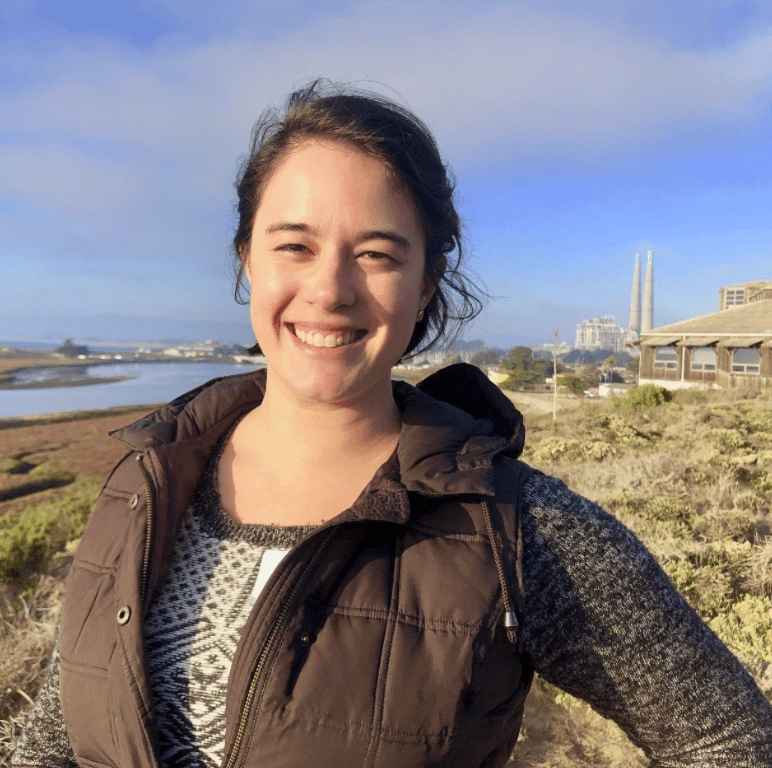
2025 HALDANE PRIZE SHORTLIST: June Shrestha discusses her paper “Marine protection and environmental forcing influence fish-derived nutrient cycling in kelp forests“, which has been shortlisted for Functional Ecology’s 2025 Haldane Prize for Early Career Researchers
About the Paper
As a foundational species, kelp play an inordinately important role in providing habitat, food, and shelter for entire underwater communities. We often think of nutrient supply in kelp forests as being dominated solely by physical oceanography—upwelling events, currents, seasonal mixing. And these processes absolutely matter.
But you know what’s a “hidden” nutrient source right in their own backyard?
Fish pee.
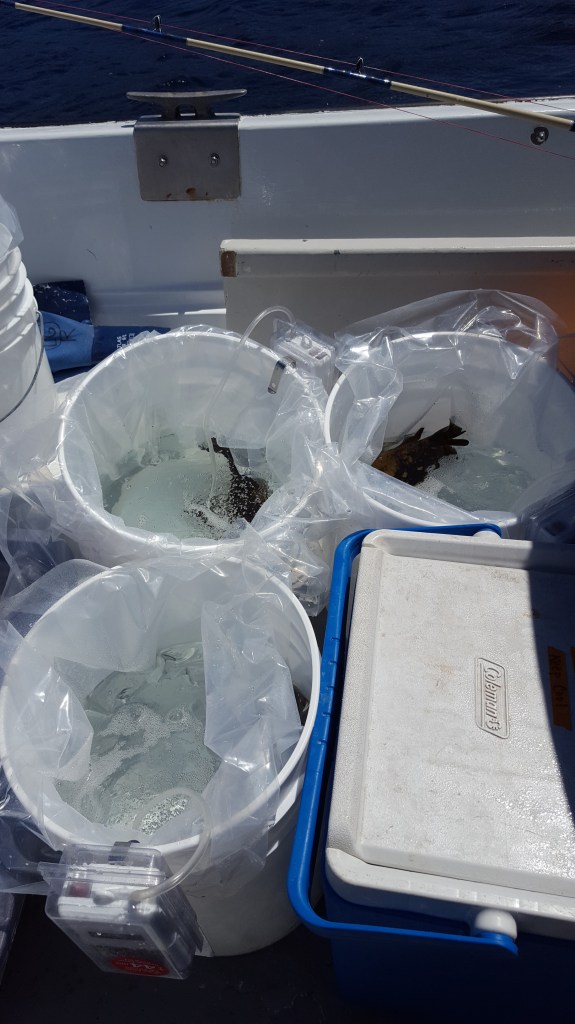
That’s right—fish pee. Through feeding and excretion, fish redistribute nutrients across space. Every flick of a tail, every burst of movement is part of an invisible chemical conversation that helps fertilize the forest itself. By measuring fish communities, quantifying nitrogen excretion rates, and modeling fish pee by marine protected area status and environmental gradients, we began to untangle how biological and physical processes work together to sustain these systems.
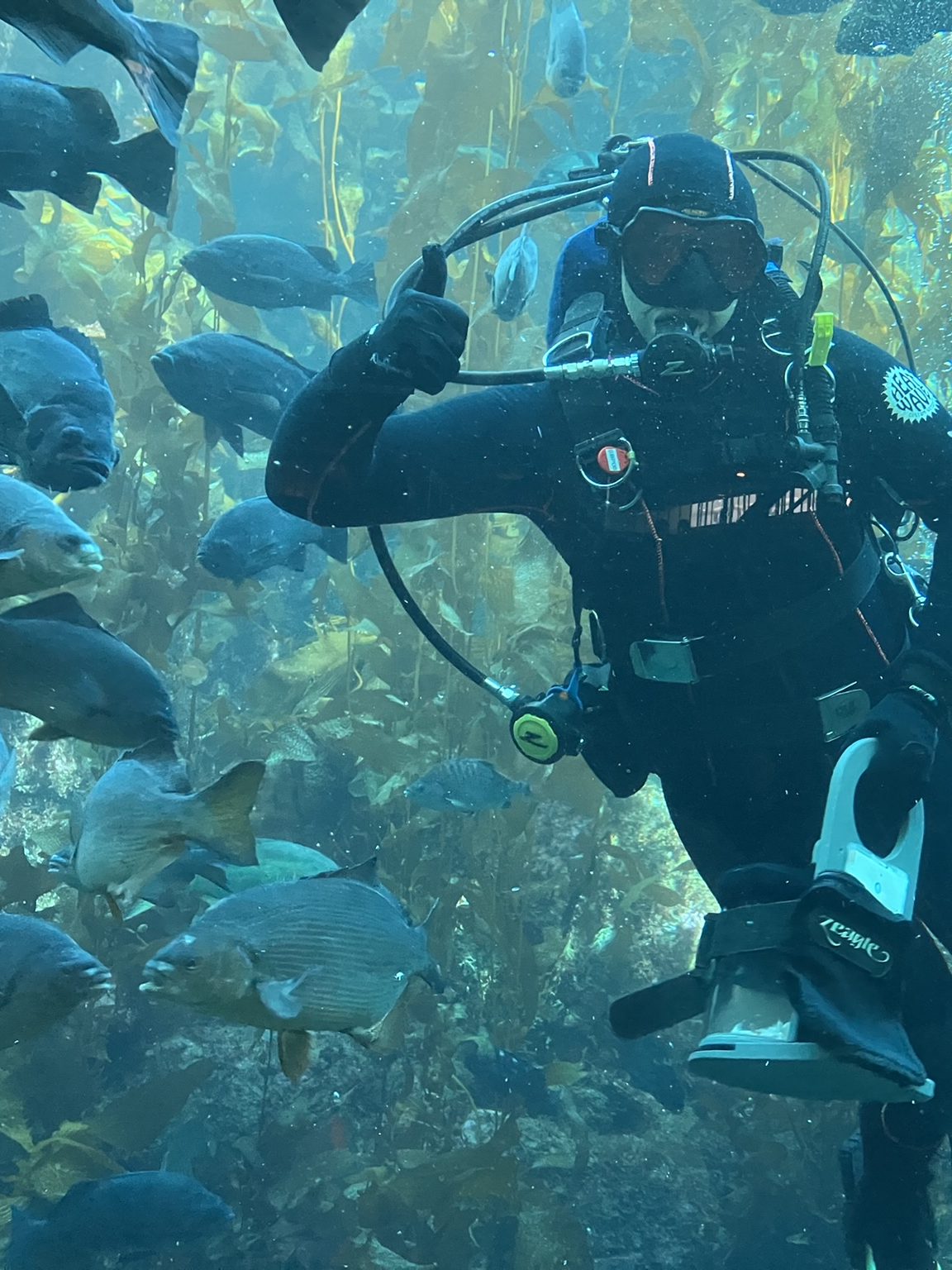
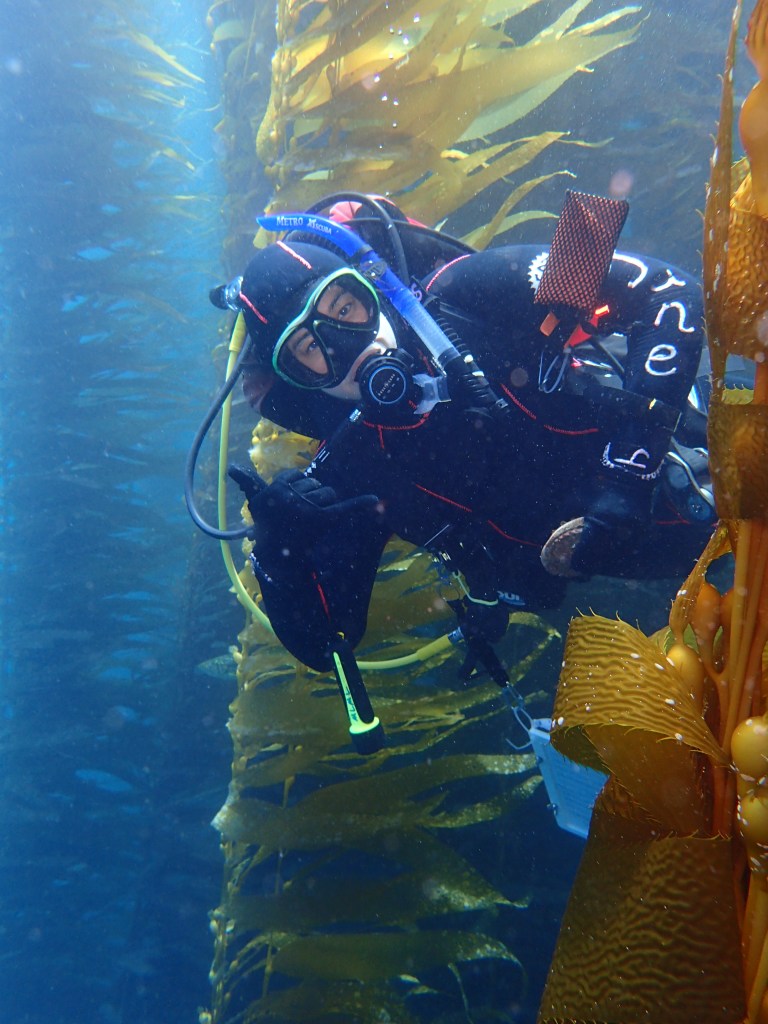
We saw that fish-derived sources of nitrogen in California were affected spatio-temporally by:
- Marine protected areas (MPAs), which alters fish abundance and community structure.
- Environmental & oceanographic conditions, such as rugosity, Chlorophyll-a, kelp biomass, wave height, and distance to shelf break.
You know what surprised me most? The scale of the fish contribution. Seeing how much nitrogen fish recycle and how it can provide the majority of nitrogen needs for kelp (in a bio-available form, no less!) during certain low-nutrient periods was eye-opening.
One of our biggest takeaways is that MPAs are needed not only to protect biodiversity, but they’re important for restoring processes, too. When we protect fish, we’re influencing the invisible chemical conversations that sustain entire ecosystems and contribute to the stability of our coastal communities. As kelp forests around the world face mounting pressures from ocean warming, marine heatwaves, and shifting species distributions, understanding every mechanism that supports their resilience has never been more important.
And that realization feels both urgent and hopeful.
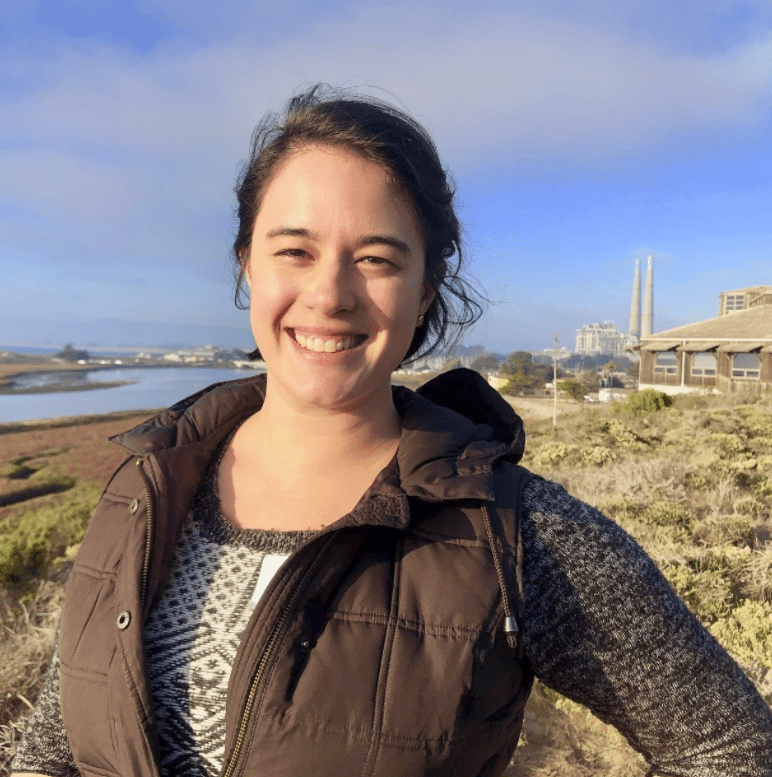
About the author
About the author
When I was a child, I loved being underwater. So much so that at age 10, I declared – very confidently—that I was going to be an “Oceanographer Scientist” when I grew up. Granted, I had absolutely no idea what an oceanographer did. But it sounded important, it got me in the water, and that was enough. Fast-forward a few decades, my path has become bigger than the ocean. What excites me most now isn’t only the science—it’s the intersection of science, community, and culture.
As a Nepali-American, I’ve always carried an awareness of multiple ways of knowing. It’s taught me that science is powerful, but it’s not the only form of knowledge. Cultural practices, lived experience, and community partnership are equally essential. Whether I’m diving underwater, drafting conservation plans, administering global financial assistance programs, or helping Tribal youth get out to the coast, the throughline is the same: collaboration. Listening first. Building with, not for.
If there’s one piece of advice I share with others, it’s this: shape your work so it’s grounded in cultural context, active listening, and consent. That’s how we move beyond extractive science. That’s how we build community-centered, collaborative programs that advance equitable environmental stewardship and supports real-world decision-making.
And remember your curiosity. For me, it all started at the bottom of a swimming pool—holding my breath, scanning the “seafloor” for treasure. I didn’t know then that I was practicing curiosity. Where will your curiosity take you?
Read the full list of articles shortlisted for the 2024 Haldane Prize here.
 Functional Ecologists